
Dead Reckoning

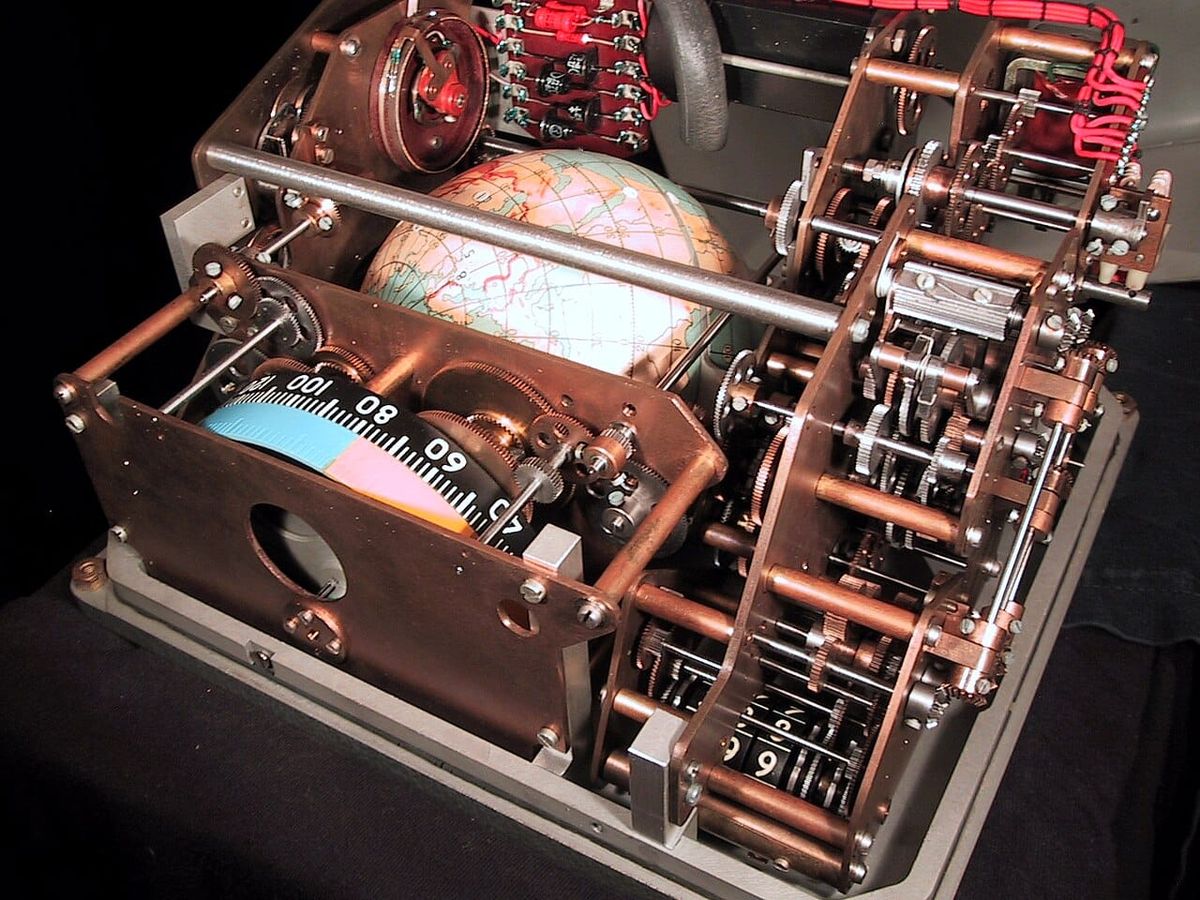

I used to run the library at the Harvard-Smithsonian Center for Astrophysics (CfA), and while I was there I had the chance to stumble across so many stories about space and astronomy that sometimes it's hard to not just make every episode be in that narrow channel. I want to experiment a bit and see what kind of stories I can tell though, so I decided to just sprinkle space in sparingly. I felt like we were overdue for one now, and the Globus is just this object that I've never quite gotten out of my head since the first time I heard about it while I was at the CfA library. When I started looking into it more I ran into Voskhod 2 and knew I had a story. And it gave me a few more ideas for the future too.
On a more personal note, the last two weeks have been a bit crazy for me while interviewing for new positions after my layoff (and my son just started kindergarten which is making me feel all the feelings). So it's been rough trying to keep all of the pieces of this show in the air (like this newsletter so thanks for your patience). But I'm glad to say last week I got out a Patreon bonus mini episode about the Escape key, and I have another for next week ready to record. If you haven't checked out the Patreon yet, I think you'll like it.
What didn’t make it in
These are a few of the things I found while doing research for this episode that I just couldn't fit into the story:

More of the Globus' Constraints
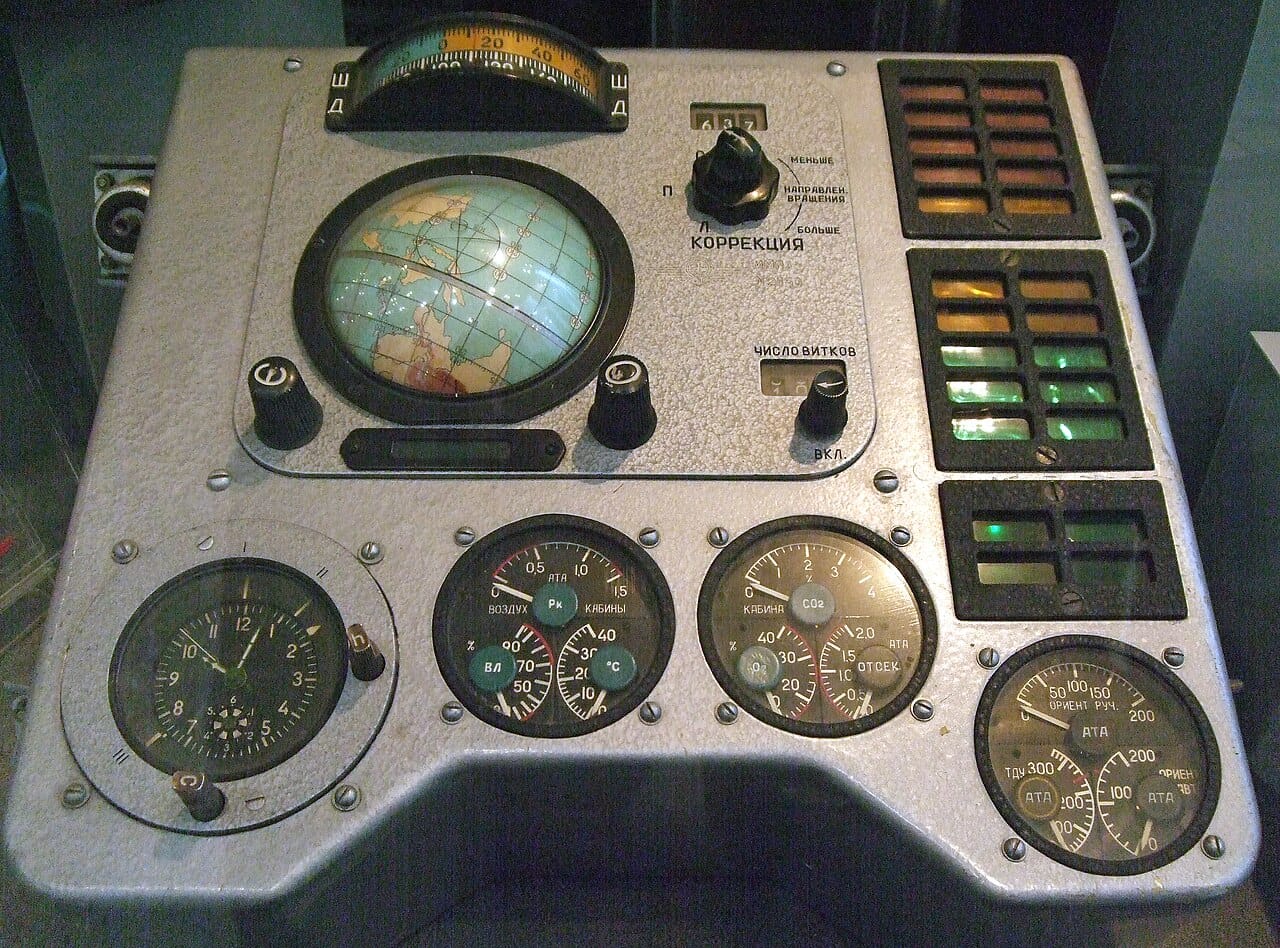
IMP instrument was more constrained than I really got into in the episode. It was analog and calculated positions using an elaborate system of physical gears, cams, and differentials rather than code, and this rigid design could only support a fixed circular orbit at a specific inclination. So if you wanted a different inclination, you needed a different Globus. Incidentally there were different Globuses, and trying to get details that were specific to the Voskhod Globus and not specific to the other missions it flew with was kind of challenging.
How the American Approach and the Soviet Approach to Navigation Differed
While the Soviets relied on these intricate mechanical analog computers for their visual navigation displays, NASA's Apollo missions utilized the fully electronic, digital Apollo Guidance Computer. I go the rope core memory used in the AGC and the integrated circuits it relied on in The Weavers, but how the AGC worked will likely need to be its own episode at some point.
More about Darevsky and Aviation Ergonomics
The Globus was the brainchild of Laboratory 47, an engineering group led by Chief Designer Sergei Darevsky. Darevsky and his team essentially pioneered the field of ergonomics for information display for the Soviet space program. What I didn't get into in the episode was that he faced heavy skepticism early on about how much control to actually give the cosmonauts. The influence the lab had on Soviet spaceflight control panels was not a given despite it feeling sort of obvious now that the cosmonauts should be able to easily interact with the controls.
The Lock
On Yuri Gagarin's historic first Vostok flight, engineers were so terrified that the weightlessness of space would break a human mind that they physically locked Gagarin's manual controls. The unlock code was sealed inside a physical envelope taped to the cabin wall, strictly for extreme emergencies. Multiple people independently and secretly told Gagarin the code before the flight because they just couldn't let him go up without knowing it.

Mozart
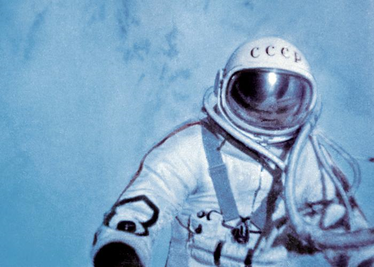
I talked in the episode about Alexei Leonov’s struggle to get back inside the airlock when his suit inflated in the vacuum of space. What I didn't include was the chilling scene unfolding back on the ground. The moment mission control realized the mission was in jeopardy, state television and radio broadcasts of the spacewalk were abruptly cut. Instead, Soviet state radio simply played Mozart's Requiem on an endless loop. Meanwhile, Leonov and Pavel Belyayev's families were kept completely in the dark, told that everything was proceeding perfectly.
The Episode
Script
There is a birch tree in the way.
The two cosmonauts inside the cramped capsule cannot see much of it, just a pale trunk pressed against the hatch, but it is enough to trap them.
They have fallen out of the sky into a forest, into deep snow, and the only door out will not open because a tree is holding it shut.
They fire the mechanism to open the hatch anyway, and the explosive bolts go off. The cabin fills with the smell of gunpowder, but the hatch just jerks hard against the trunk and stays where it is.
So they decide to rock the capsule. Two men in stiff pressure suits throw their weight one way and then the other over and over until finally the hatch shifts enough to come loose. Then the air pours in, and they feel their lungs contract with the sudden blast of cold. Then they climb out and they immediately sink into the snow up to their chests.
A few hours ago, they were in orbit. They were never meant to be here, in a frozen forest in the Urals, hundreds of kilometers from anyone who is looking for them. They were never really meant to bring the ship down themselves at all.
But something went wrong up there, and now they are here, alive in this exact wrong place, Trying to get home.
I'm Daina Bouquin, and this is Found in the Machine.
In 1961, nobody knew what space would do to a person's mind. Soviet doctors worried about something the literature of the era called "space madness," a panic or a psychotic break brought on by weightlessness or by the sight of the whole Earth through a window. A cosmonaut who came apart up there could take the whole mission with him.
So the program put its trust in the machinery and in the men running it from the ground. Soviet spacecraft would reach orbit on their own, hold their attitude, turn themselves for descent, and fire a brake, all of it on a plan written before launch. The cosmonaut was meant to ride along and to monitor the control panel.
The first control panel for Soviet spaceflight was built in Zhukovsky just outside Moscow in a branch of the Flight Research Institute called simply Laboratory 47. It was run by an engineer named Sergei Darevsky and focused on the place where the human meets the instrument, a field called aviation ergonomics.
Among the most important components needed for this first control panel were the devices meant for an emergency, the ones that would allow the cosmonaut to take control and fly the spacecraft manually. These tools needed to be able to go on working in a vacuum. They needed to withstand radiation, and they needed to be instantly understood by someone traveling at eight kilometers per second in a tiny capsule while under unknowable duress.
And the plan was for a man to be in orbit within a year.
So the engineers decided to give them something familiar. They decided to give them the world.
Now, there are roughly 30 people in Laboratory 47, and the ones who took the lead were young. We don't know how young. We don't even know their first names. But a much later account of this work in English lists them as young engineers. Nosov, Marchenko, Makarov, and Lavrov. They led the project. The designers weren't called young, but maybe they were. Averin, Safaltkin, Simonenkova, and Tsypin.
The list of manufacturing specialists is long and ends with the phrase, "and others."
The young engineers and the team in the lab built something called the IMP from the Russian term indicator of position in flight. But everyone just called it the Globus. Because it was a globe.
It was about the size of a grapefruit made of aluminum and wrapped in printed paper with coastlines and rivers and mountains and heavy colored lines drawn around the borders of the Soviet Union. There were eight numbered circles to show the position of radio sites. It sat in a box about the size of a large toaster under a clear dome with a fine crosshair etched into the middle. Beside it, they placed a small counter like the odometer of a car to tick off the orbits as they went by.
But the inside looks like it was made by watchmakers.
It contains hundreds of metal components aligned in complex gear trains. Every second, something inside this machine gives a small push that travels outward through a chain of brass gears until the carefully angled globe begins to turn. And it has to turn two ways at once because two things are moving. The ship is sweeping around the Earth, and the Earth is revolving underneath the ship. There are gears that add those two motions together continuously using the same arrangement that lets the back wheels of a car turn at different speeds around a corner. It's called a differential.
And then there are the cams, wheels with irregular edges. Their shapes are where the orbit lives. A latitude over the course of an orbit is translated into a curve, and then someone has to grind that curve into the edge of a piece of metal. Each of the cams has another component pressed against its rim, and as the wheel goes round, its movement falls with the shape of the edge. You could feel the equations with your fingertips.
Here's the thing about it, though. Nothing reaches it from the ground. No signal comes in from a gyroscope or anything else to tell it where the ship actually is. It is a dead reckoning device. It finds its current location by using a set starting point and then measuring speed, direction, and travel time. Everything it knows, a person has to put into it by hand.
So before launch, someone sets it to the coordinates the ship is supposed to reach. Then the ship goes up, and the orbit it actually ends up in is not exactly the orbit on paper. So radar and radio on the ground measure the real one People at desks work out the difference, and then they read the numbers up to the crew. And in the cabin, someone turns the knobs. There is a knob for longitude at the equator, a knob for where you are along the orbit. The cosmonaut sets each of them, and then they do it again. Every time they come back into radio contact, the ground tells them what it knows, and they wind the thing back into agreement with the Earth whenever it's needed.
But there were not many Soviet ground stations. For most of every orbit, there was nobody to talk to. No voice, no data and for half of every orbit, it's night. The ship has a sight in the floor for looking at the ground, but at night there is no ground to look at. Clouds do the same thing. Which leaves the globe, turning quietly with a crosshair gliding over the paper.
And the Globus did one other thing If you threw a switch, a motor ran the globe forward about a third of the way round and stopped. Now the crosshair was not over where you were. It was over where you would come down if you fired your brake right now.
In April 1961, Yuri Gagarin went up, went round the world once, and the ship did every part of it alone. The little globe turned the whole way and told him where he was over and over, and nothing went wrong.
For four more years it goes like that. The ships fly, the machines hold. The globus gets set and reset and set again. And every crew that goes up knows where they are even in the dark.
But then came March 1965, Voskhod 2. The mission had two men aboard instead of one, Belyayev, the commander, and Alexey Leonov, the navigator. Early in the flight, Leonov becomes the first human being to do a spacewalk, and it nearly kills him. In the vacuum, his suit swells so stiff that he cannot bend it enough to get through the small hatch. He ends up having to bleed off his own air and go in backwards to get himself back inside.
But that was only the first problem, because to get home, the ship has to point exactly at the right angle and fire its brakes at exactly the right time. But the automatic system that does this fails. They need to bring the ship home by hand.
Now, the Voskhod was a retrofitted one-man Vostok with the ejection seat pulled out and two seats put in. They were turned 90 degrees so they would fit, and the control panel meant for one man sitting in the other direction did not move. The sight was in the floor, and it also did not move. And it was small, a sphere with an interior diameter of about two meters, and it was mostly full of equipment.
So when the automatic system fails, getting to the sight in the floor is a bizarre feat. Belyayev has to leave his seat and stretch himself sideways across the cabin to look through the sight while Leonov holds him still in zero gravity. And remember, Leonov is the navigator. He also has to decide where on Earth this ship is going down.
He throws the switch and the globe runs forward. It shows their orbit will take them straight over Moscow. He writes later that they could have set down in Red Square, but he picks open country near the city of Perm, west of the Urals, reasoning that even if he is off, they will at least come down on Soviet ground.
But Belyayev has to get back in his seat before he can fire the brakes. And it takes him forty-six seconds in his bulky, stiff suit. A 46-second delay at nearly eight kilometers per second will throw you off course.
But they do finally fire the brakes. Only now something else is wrong. The two halves of the spacecraft that are meant to separate just fail to come apart. A cable holds them together and the whole thing begins to spin harder and harder. The force of it eventually bursts small blood vessels in their eyes.
But then the cable burns through and the module comes free. The parachute opens.
They can hear and feel the wind whistling in the straps as the module swings on the landing chute.
Then they come down into the deep snow and meet the tree.
Nobody actually knows where they are. They do not know either. But search planes spot the capsule chute a few hours later. They cannot land in that forest though, so the first help to arrive is a scatter of supplies dropped from the sky, most of which break or get stuck in the tree branches.
And the temperature that night falls past twenty-two below Fahrenheit. Their suits are full of sweat from the spacewalk and from the fight to get down, so they strip, wring them out, and put them back on, hoping they won't freeze to their skin. And then they wait in the dark, listening to trees crack in the cold.
Rescuers reach them on skis the next morning, but it takes another full day to cut down enough trees for a helicopter to land about nine kilometers away from where they landed. On the third morning, they ski out and the helicopter lifts off.
The Globus kept flying. A person could read it at a glance. It was completely immune to software crashes, cosmic radiation bit flips, and electromagnetic interference. It was there in the radio silence and in the dark.
A larger version of it went into Soyuz and stayed there through the Salyut stations, through Mir, through the crews ferrying up to the International Space Station. Until 2002, a small paper-covered globe turned behind a domed window while somebody in orbit kept it on track.
But the cosmonauts felt the limitations. They complained. They had been given a perfectly predictable world to operate in the real one. The engineers who built it couldn't account for us. For the shape of a human being trying to turn in a cramped space. For the things that inevitably break because they always do.
And yet those two men who landed in the snow landed in their own country. They didn't land in Red Square. They didn't land in a foreign city or the ocean, and they were found. They were able to leave that forest alive.
They made it home.
I'm Dana Boquin, and this is Found in the Machine.
If you enjoyed this story, please leave a rating or review wherever you listen. And if you'd like more content from me, I've started a Patreon supporters get access to my new miniseries, Found in the Margins, where I'm telling stories about things I come across while doing research for the main feed. The most recent bonus episode was about the Escape key, and I have ideas for some really fun things to come next. You can find the Patreon and more ways to support the show by going to foundinthemachine.com/support. Thanks so much for listening.
References
Becker, J. (2026, June 7). Spaceflight mission report: Voskhod 2. Spacefacts. https://www.spacefacts.de/mission/english/voskhod-2.htm
Leonov, A. (2005, January). The nightmare of Voskhod 2. Air & Space Magazine. https://www.smithsonianmag.com/air-space-magazine/the-nightmare-of-voskhod-2-8655378/
Shirriff, K. (2023, January 21). Inside the Globus INK: A mechanical navigation computer for Soviet spaceflight. Ken Shirriff's Blog. https://www.righto.com/2023/01/inside-globus-ink-mechanical-navigation.html
Tiapchenko, Y. (2003). Information display systems for Russian spacecraft: An overview (S. Gerovitch, Comp. & Trans.). Computing in the Soviet Space Program, MIT. https://web.mit.edu/slava/space/essays/essay-tiapchenko1.htm
Voskhod 2. (n.d.). In Wikipedia. Retrieved September 1, 2026, from https://en.wikipedia.org/w/index.php?title=Voskhod_2&oldid=1350315400