
Half-Light

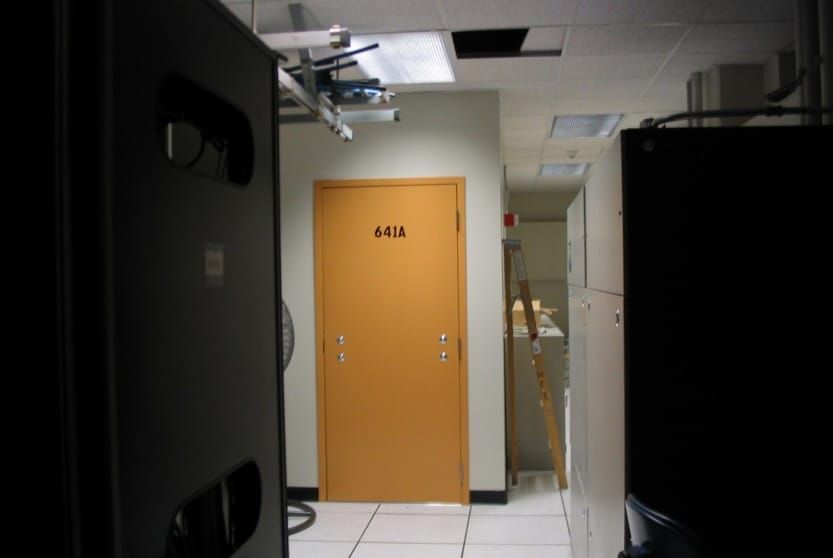

When I started this show, I knew I wanted "internet history" to be part of it. But what goes in that category isn't always obvious.
I often get this feeling like the more I learn about something, the less confident I am in my understanding of it. And that's sort of what happened with "internet history," and why this episode took months to happen.
I mean, what actually counts as internet history? I say the podcast covers it, but what am I really talking about? Inventions? Discoveries? Standards? Infrastructure? Norms? Something else? This episode about Mark Klein and what he uncovered in Room 641A is something else. But every time I tried thinking through the history of the internet, I always hit the NSA. So I decided that I couldn't leave out the spying.
But I did not know how to turn mass surveillance into a story until I found Mark's book.
I was hunting for computing history titles to add to my Bookshop.org shop, and the title stopped my scroll. "Wiring Up the Big Brother Machine" caught my attention. So I bought it, read it, and thought it was a fit. But then I got stuck.
I spent hours talking it through with my husband because I could not let go of a question underneath the story itself: why isn't the outrage louder? We are more online than we have ever been, the technology keeps getting more capable, and somehow this is not sitting at the front of anyone's mind. The closest comparison I could land on is someone constantly searching your house on a loop. As long as nothing looks relevant to them, you never notice and they say nothing. But someone is still in the house. Why do we let that pass?
The conversations kept circling back to this feeling I have that this isn't a "wake up sheeple" situation. It's not like everyone is just deciding not to care and to look away. It's more nuanced than that but I couldn't get my thoughts together about it. And I couldn't write the story without having a hypothesis I could articulate to myself.
Then the scene with my son that opens the episode happened a few weeks ago, and it clicked.
The episode became two stories running in parallel. One is what Mark Klein actually found in that room on Folsom Street. The other is infrastructure blindness and the technology itself.
I will admit the timing was not incidental either. FISA Section 702 expired this June, right alongside the run up to America's 250th anniversary, and that felt like the right moment.
What didn't make it in
There was a lot I had to leave on the floor for this one.
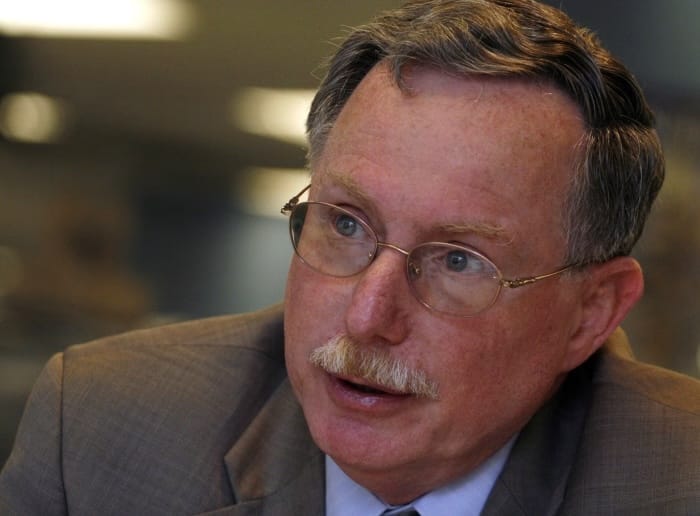
Mark's early life. Before any of this, Klein was a civil rights protester and an anti Vietnam War protester at Cornell. That history contextualizes his willingness to become a whistleblower decades later, but there was no clean way to fold it into the runtime.
Operation Ivy Bells. I went down a sort of crazy rabbit hole on an earlier chapter of NSA cable tapping that it made clear that Room 641A was an evolution of an older idea.
In 1971, the US Navy, the CIA, and the NSA ran a joint mission called Operation Ivy Bells. The target was a Soviet undersea communications cable connecting the Pacific Fleet's naval base at Petropavlovsk to its headquarters at Vladivostok. The US sent in a modified submarine under a cover story about recovering missile debris. Navy divers found the cable and clamped a recording device around it that never actually pierced the casing, so nothing about the cable's own signal ever changed. Divers came back every month to swap out the tapes. The operation ran for almost a decade before an NSA analyst sold the secret to the KGB in 1980. What strikes me most, looking at it next to Mark's story, is how much of the method survived the jump from analog to fiber.
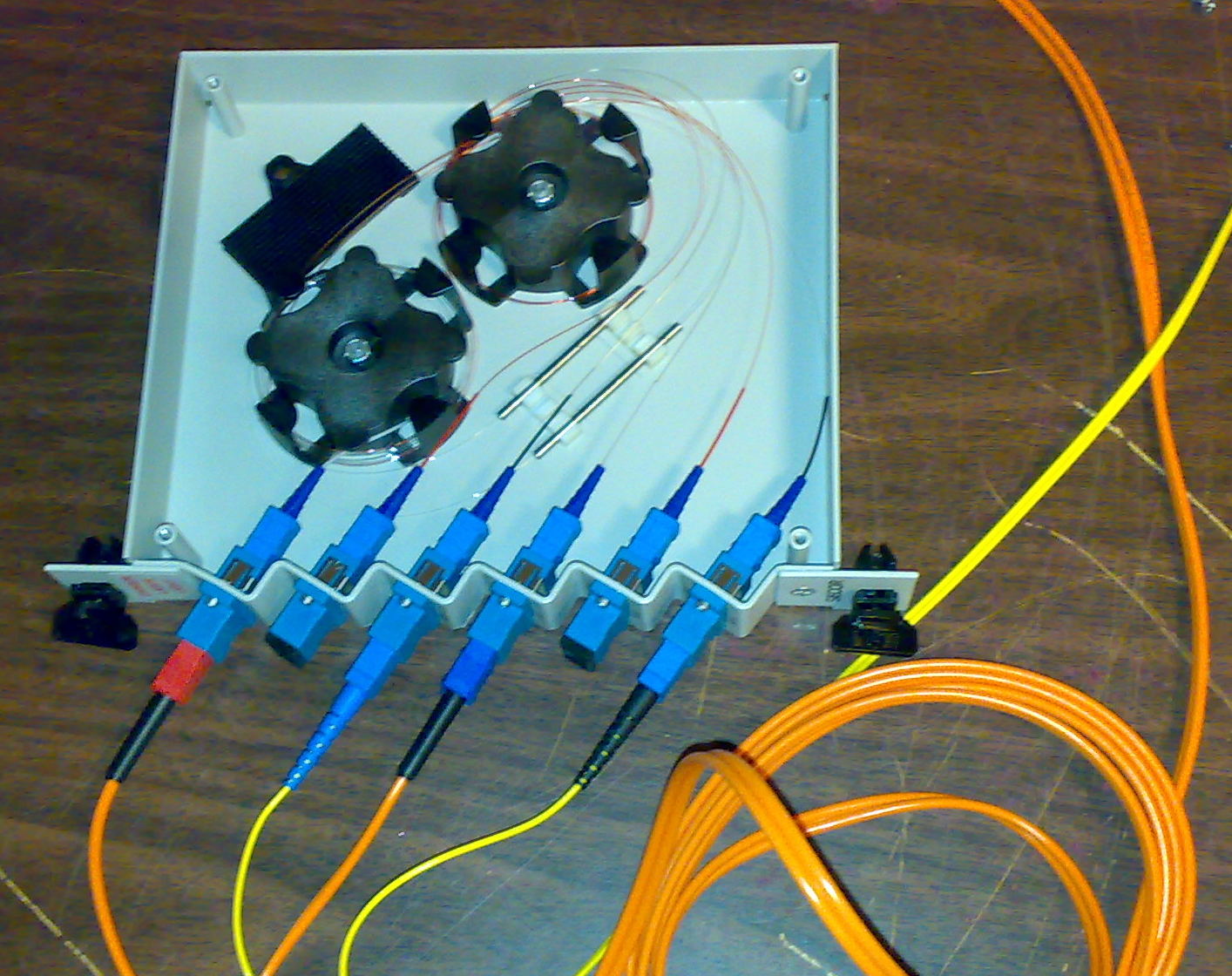

"Upstream" collection. I never unpacked what "upstream" means in this context, or why the dragnet becomes inescapable once you understand where the physical fiber actually sits. The Covert Access Team's breakdown of what is inside Room 641A is the clearest explanation I found if you want to go further than the episode does.
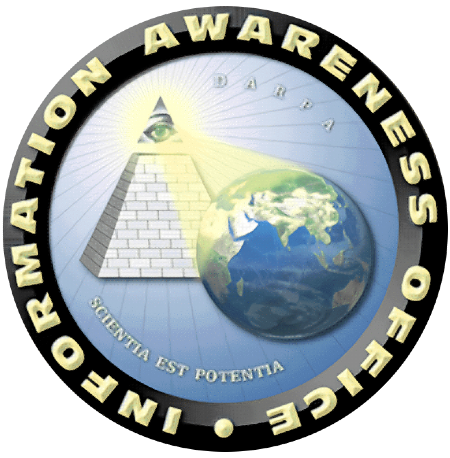

The Total Information Awareness emblem. I wanted to spend time on the sheer audacity of the original TIA office's symbolism. It's a pyramid with an all seeing eye projecting a beam of light down onto a globe, ringed with the motto "Scientia Est Potentia," knowledge is power. It reads less like a government seal and more like something a screenwriter would reject as too on the nose. It deserved a moment in the script and did not get one.
Two scrapped cold opens. I wrote two different versions of an opening built around a technician climbing a cell tower, using a kind of digital overview effect as the framing device. Neither one felt right. It came across as observing the machine from outside it, and the whole point of this episode is that none of us get to stand outside it.
Edward Snowden. I left him out entirely, for the same reason I kept Margaret Hamilton out of the frame in "The Weavers." Some names carry so much gravity that even a passing mention would pull the whole story toward them. This episode needed to stay with Mark, and a name that big does not let anything else stay in focus.

Whether to mention my son at all. I went back and forth on this one more than anything else. I am careful about what I put into the world about him. But cutting him from the opening would have meant hiding the fact that I have my own infrastructure blindness too, and without that admission the whole episode risks sounding like I am scolding the listener instead of sitting next to them.
Don't forget to subscribe, rate, and review wherever you listen 💚
Support the show at Buy Me a Coffee.
The Episode
Script
Mark Klein (archival audio): "It's room 641A says on the door, and what's mysterious about it is there's no door handle. So it looks kinda odd."
Daina Bouquin (host):
There is a room on the sixth floor of a building on Folsom Street in San Francisco. And Mark Klein is not allowed to go in. If you know Mark, you know that's strange. Because for 22 years, going into rooms like this has been his job. Rooms full of routers and modems and the perpetual mechanical whirr of the machines that make our phones work and the internet run.
Mark has keys to every door in the building except for this one. Only one man in the building has the clearance to walk through this door, and it is not him. One day the air conditioner inside the room starts to leak. Water comes down through the floor onto the equipment below. But that one man isn't available to fix it, so the water keeps coming. For days. Emergency or not, no one else is allowed in.
Mark Klein wonders what is in that room. And he is going to find out. Then he is going to spend the rest of his life trying to tell you.
I'm Daina Bouquin, and this is Found in the Machine.
From my house in western Massachusetts, I can see the top of Mount Greylock. It is the highest point in the state, and there is a stone memorial tower at the summit. At night the tower lights up. It is very small from where I stand. But my five-year-old son can see it from his window too.
One evening, around dusk, he asked me what the other one was. I didn't know what he meant. "The other what?" He pointed . "The one next to it," he said. So I turned and I really looked. And there, just to the right of the tower that I looked at every single day, was a faint line standing out against the fading sky. A radio tower. I had simply edited it out. And I think we do that with almost all of them. Some towers we just stop noticing, and others we hide on purpose. We dress them up as ugly pine trees planted along the highways so the thing carrying our voices disappears into the scenery.
But the towers are only the part that rises above the ground. The signals they catch do not stay in the air. They dive. Straight down into the earth. The waves become light pulsing through dark conduits, running beneath the roads, crawling across the cold, crushing black of the ocean floor. It is vast. It may be the largest machine human beings have ever built, and most of us have trained ourselves not to see any of it. We have to be told that it's there. Sometimes by a child.
And anything you have stopped seeing is an easy thing to steal. Twenty years ago, in a windowless building with a secret room, Mark Klein found a thief. But that's not where he started.
He went to Cornell in 1962 and enrolled at the School of Engineering. But somewhere along the way, Mark put down engineering. He graduated in 1966 with a degree not in electronics, but in history. A historian is trained to look past the official press release. They go looking for the primary source. That instinct never left him. But the world was hurtling towards a future built on silicon and circuitry. So in the end, Mark did go to technical school. He learned the machines after all. And by 1981, he landed a job at AT&T.
Now, fast forward to the summer of 2002. Mark is sitting at his workstation in an AT&T office on Geary Street in San Francisco. An email comes in. A representative from the National Security Agency, the NSA, is coming to visit the office. Mark happens to be the one who opens the door when the agent arrives. A closed-mouthed, unsmiling man who conducts his interviews and leaves. Soon after, Mark learns that one of his colleagues has been transferred to a building on Folsom Street to work in a large, newly built room on the sixth floor. No one is really sure what the room is for. Then at lunch one day, another colleague mentions that rooms just like it are going up in other AT &T buildings in other cities too.
Now you have to remember what the United States was like around this time. So soon after September 11th. America was afraid and the government was on high alert. Inside the Defense Department, a man named John Poindexter had proposed a system that he said would protect the country. The system would just need to see almost everything about everyone.
He called it Total Information Awareness. The idea was to build a dragnet so complete that no threat could hide. Financial records, medical files, browsing history, your face, your gait, your veterinary records. The program became public and Congress killed it in 2003. It was too much and the name was too honest. Even a rebrand to Terrorism Information Awareness couldn't save it. But killing a program is not the same as killing an idea. The architecture survived. It just moved deeper into the hands of the NSA.
This is the world Mark Klein walks into in the fall of 2003 when he is also transferred to AT&T's Folsom Street facility. This building is massive, a brutalist fortress with almost no window light. It is also a vital organ in the anatomy of the American Internet. It's a peering hub. A place where AT&T's network physically shakes hands with the networks of other companies. It's part of what is referred to as the internet backbone. Data from millions of people flows into this building, travels up to the seventh floor, gets sorted by massive routers, and is sent back out into the world to find its destination. But Mark soon finds that not all of the data is leaving the building.
While he is learning the ropes in the cavernous seventh floor internet room, he asks an older coworker about the secret room down on the sixth floor. Room 641A. Mark assumes it's for listening to phone calls because the phone switch is right next door. "No," he says. "Internet."
The coworker shows him a cabinet in the internet room. A splitter cabinet.
Here is how a fiber-optic splitter works. A strand of fiber is a pipe full of light. That light is your data. To tap it, you cut open the fiber coming down from the routers. You splice a bit of special glass into that wound to create a fork. When the light hits the fork, it splits. It's called fiber tapping, and it is passive. It doesn't require electricity or have a computer brain. Because it is just a piece of molded glass, it makes a clone of the data silently. It doesn't leave a digital footprint. One half of the light continues on its normal journey out to the person who it was meant for. While the other half, the exact duplicate of every email and search query, is diverted. It gets fed down a separate line into room 641A. And the illusion of privacy stays intact.
Time passes, and Mark's unease about the secret room grows. But he does his job in the internet room. Then one day a coworker hands Mark a set of documents that had been left lying around on top of a router.
Mark takes them back to his desk, and of course he reads them. When he realizes what he is holding, he almost falls out of his chair. The documents show that in February 2003, AT &T cut into 16 high-speed internet peering links and installed a device called a Narus STA 6400. STA stands for Semantic Traffic Analyzer. This machine is built to swallow data at incomprehensible speeds, to sift through noise, capture the light, and read everything, looking for whatever someone programs it to find. And there are other rooms in other AT &T buildings across the country, just like 641A.
If Mark speaks up, he is going to lose his job, lose the pension. He might go to federal prison. The Espionage Act does not look kindly on people who talk about the National Security Agency. But he is sure he can't be the only one who knows.
In May 2004, Mark Klein retires. But when he leaves the building for the last time, he takes the documents with him. The historian holds on to the primary sources. He takes them home and puts them in a drawer. And still he waits. Over a year passes. Then, in December 2005, the New York Times publishes an explosive Pulitzer-winning story. They reveal that the Bush administration has been running a secret, warrantless wiretapping program in the wake of 9-11. The secret is finally out. But the government pushes back on the story.
George W. Bush (archival audio): "In the weeks following the terrorist attacks on our nation, I authorized the National Security Agency, consistent with US law and the Constitution, to intercept the international communications of people with known links to Al Qaeda and related terrorist organizations. Before we intercept these communications, the government must have information that establishes a clear link to these terrorist networks. This is a highly classified program that is crucial to our national security."
Daina Bouquin (host): Mark knows this is a lie. The thing he saw, it doesn't listen to specific people. It splits the light.
And he realizes something else. Anyone who knows the truth at AT&T is still employed there, and he may be the only one who knows and is free. So in early 2006, Mark makes the decision that will reshape the rest of his life. He stops waiting.
Mark puts on a trench coat, gathers his schematics, and walks into the offices of the Electronic Frontier Foundation, a digital rights group in San Francisco's mission district. Mark sits down with their lawyers. He tells them about Room 641A. He explains the splitter cabinet and signs a sworn declaration.
The EFF uses Mark's evidence to file a sweeping class action lawsuit, Hepting v. AT&T. For one bright moment, it looks like the machine might come apart. But then the government does two things. First, it told the court that the case could not go forward because everything about it was a state secret. The court disagrees, but in the end it doesn't matter. Because Congress reaches back and rewrites the past. In 2008, they pass a law that makes every company that opened its wires to the government untouchable. You could no longer sue them because as of that morning they had never broken the law.
That same statute made the machine itself legal going forward. So the case against AT&T is dismissed. Not because Mark was wrong, but because Congress changed the rules.
The lawyers tried again with a new suit, but the court said Mark's evidence wasn't enough. They said although he could describe the machine, because he did not work in the room, he could not speak to what was happening on the other side of the door. The door he could not open.
Mark Klein lived another 20 years. He wrote a book. He gave interviews. Then he got sick. And in March 2025, he passed away at 79. His documents remain a cornerstone for privacy activists and lawyers. But the machine he found never turned off.
The statute that lets the U.S. government pull data from the Internet backbone without warrants is FISA Section 702. Congress actually let it expire in June 2026, but the machine didn't even slow down. A secret court called the FISA court had already signed off in another year.
You cannot write a spy thriller about a work order to install a splitter cabinet. But that's what Mark had.
A quiet technician showed up with some schematics, and it didn't look like Watergate. It looked like math and glass.
And we don't feel it when they take half the light. We don't even notice the light.
We edit out the towers on the horizon, and our words run unfelt beneath our feet.
The room is still there and the door is still locked. Yet, we feel fine.
I'm Daina Bouquin, and this is Found in the Machine. If you would like to hear more from me and find out what didn't make it into this episode, you can go to notes.foundinthemachine.com. Thanks for listening.
Sources
Archival Audio
FRONTLINE. (2008, May 19). Room 641a [Video]. PBS. https://www.pbs.org/video/frontline-room-641a/
Bush, G. W. (2005, December 17). President's radio address [Video]. The White House. https://georgewbush-whitehouse.archives.gov/news/releases/2005/12/20051217.html
Additional Reading
Cohn, C. (2026, April 30). The whistleblower who uncovered the NSA's "big brother machine." The MIT Press Reader. https://thereader.mitpress.mit.edu/the-whistleblower-who-uncovered-the-nsas-big-brother-machine/
Electronic Frontier Foundation. (2014, August 9). How the NSA's domestic spying program works. https://www.eff.org/nsa-spying/how-it-works
FISA Amendments Act of 2008: Congress grants telecommunications companies retroactive immunity from civil suits for complying with NSA terrorist surveillance program. (2009). Harvard Law Review, 122(4), 1271-1278. https://harvardlawreview.org/print/vol-122/congress-grants-telecommunications-companies-retroactive-immunity-from-civil-suits-for-complying-with-nsa-terrorist-surveillance-program-ae-fisa-amendments-act-of-2008-pub-l-no-110-261/
Harris, B. (2025, June 12). What is inside Room 641A. Covert Access Team. https://covertaccessteam.substack.com/p/what-is-inside-room-641a
Klein, M. (2007). Public unredacted Klein declaration [Legal declaration]. Electronic Frontier Foundation. https://www.eff.org/document/public-unredacted-klein-declaration
Klein, M. (2009). Wiring up the big brother machine... and fighting it. BookSurge Publishing. Bookshop.org affiliate link
Marcus, J. S. (2006). Declaration of J. Scott Marcus in support of plaintiffs' motion for preliminary injunction [Court filing]. Hepting v. AT&T Corp., No. C-06-0672-JCS (N.D. Cal.). Electronic Frontier Foundation. http://www.eff.org/legal/cases/att/SER_marcus_decl.pdf
McDaniel, E. (2026, June 12). A key U.S. spy tool has lapsed — now what? NPR. https://www.npr.org/2026/06/12/nx-s1-5856291/fisa-702-surveillance-expiration-bill-pulte
Mooallem, Jon. (2025, April 11). Mark Klein, a Whistleblower Who Revealed Domestic Spying, Dies at 79. The Wall Street Journal. https://www.wsj.com/us-news/mark-klein-whistleblower-dies-73f434c7
New, W. (2003, September 25). Congress funds Defense, kills Terrorism Information Awareness. Government Executive. https://www.govexec.com/defense/2003/09/congress-funds-defense-kills-terrorism-information-awareness/15051/
Operation Ivy Bells. (n.d.). In Wikipedia. Retrieved July 6, 2026, from https://en.wikipedia.org/wiki/Operation_Ivy_Bells