
Silent Agreement

For about a week, I was utterly convinced I was going to ruin this episode.
After a stretch of stories that felt heavy and often tragic, I really wanted to write about something else. On my list, I had "MIDI" and I thought it fit the bill. To me, the story of MIDI is just lovely. It’s this rare, optimistic moment in the 1980s where fierce corporate competitors decided to cooperate so people could make music with new tools.
But after hours of increasingly frustrated attempts to just start the story, I almost gave up.
MIDI itself isn't music. It doesn't make a sound. It’s an open standard. It's a stream of digital commands telling a machine when a note starts and when it stops. But I could not write an audio story about music without music. That would be ridiculous. So I knew I needed music, but figuring out what that meant was a lot more difficult than I thought it would be.
I'm actually more of a metalhead. I don't actively listen to electronic music (despite what my episodes usually sound like). And I didn't really know all that much about how MIDI works. I quickly felt completely out of my depth.
I also just couldn't figure out how to let a listener experience the specific thing I find so magical about MIDI. After a lot of iterating, it became clear that what I love about it is that by writing music down in this specific portable, digital way, it outlives us entirely. It takes on entirely new lives, the way books do.
But I didn't want the episode to feel contrived. I didn't want to frame it around someone sitting down at a grand piano, or a producer messing with a MIDI controller in a high-tech studio, or something as passive as just listening to an album. I wanted the music to feel ambient, ubiquitous, and casually beautiful.
So, I started running down dead ends.
I looked into whether modern musical greeting cards still use MIDI (they don't). I went down a rabbit hole of old, fuzzy telephone hold music and elevator tracks. I thought about the blocky, nostalgic 90s soundtracks of video games like DOOM. They all used MIDI in the past, sure, but none of them captured that weightless, timelessness I was looking for.
It took forever, but I finally landed on a thread that felt right: a piece of Bach, an airport, and a child hitting keys on a keyboard. A sequence of pure, unpretentious translation.
The Piano Roll Fallacy
Once I had the framing, I still had to wrestle with the technology. Like I said, I don’t actively listen to electronic music, and to make things worse, the secondhand descriptions I was finding weren't helping. Every article I found compared MIDI to old player piano rolls.
But the more I looked at the original MIDI specification, the more I realized that comparison is completely wrong.
Piano rolls were mostly proprietary, designed by companies to lock you into a brand. You couldn't just swap the rolls into different pianos. MIDI was an open treaty.
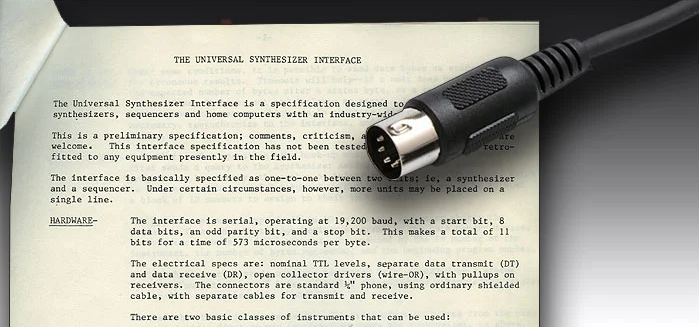
More importantly though, piano rolls are deterministic. A hole in the paper means one exact, rigid sound. But the original MIDI spec shows that the receiving instrument interprets the signal (see page 10). It can be calibrated, shifted, and altered. It’s a live, flexible conversation.
I couldn't use the piano roll analogy because it's wrong, and it was also boring.
Instead I went with sheet music. Sheet music has performance instructions along with the notes and I think that's so much more workable. One orchestra can interpret the instructions in a way that differs slightly from another. To me it's accurate and so much more vivid. The history gets longer.
But I still needed a historical anchor.
The Rust Belt Connection
A tiny, buried memory from my childhood kicked in.
I grew up in Buffalo. When you grow up in a Rust Belt city, you carry a specific kind of weird pride in the place you come from. I do, almost despite myself. And ages ago, I remember reading a random listicle online about things people didn't know about the Rust Belt. One of the items on the list was a sentence stating that techno music was born in Detroit. I don't know why that fact stuck.
But knowing little about electronic music, I at least knew that about techno, so I figured I'd start there. I decided to dig into early Detroit electronic music to see if the timelines crossed. That’s when I hit the jackpot: a Sound on Sound archive article about the making of the 1985 track "No UFOs" by Model 500.
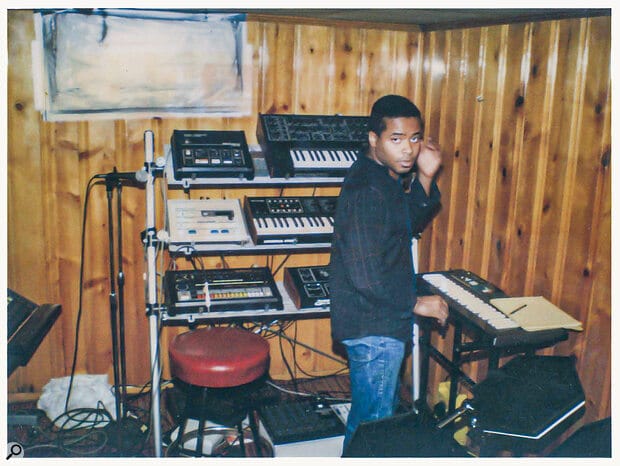
In the interview, Juan Atkins, describes building his studio in his grandmother's basement. He casually mentions how he used this brand-new interface called MIDI to chain a Sequential Circuits DrumTraks machine into a Roland TR-909.
I froze when I read that.
Sequential Circuits was the American company. Roland was the Japanese company. They were the exact rival executives who had sat in hotel rooms just a couple of years earlier, arguing over data bytes to hammer out the MIDI agreement. They built the protocol thinking it would make life easier for musicians. It did.
Suddenly, the protocol wasn’t silent anymore.
What didn't make it in
Every time I finish an episode, I’m left with a pile of research fragments that I love but just couldn't squeeze into the narrative arc. Here are a few things that didn't make the final edit:
The Ghost Pins: If you look at a standard MIDI cable, it has those classic five pins arranged in a little smile. But internally, the protocol only uses three of them (one for the data signal, one for power, and one for the shield). The engineering reason for this is actually elegant: MIDI relies on an "optocoupler." The electrical signal from one instrument is converted into a tiny flash of light inside the machine, which is detected by a sensor on the other side. Because the electrical circuits never actually touch, you don't get ground loops (that horrible, buzzing audio hum you get when you plug too many electronics into the same wall). The extra two pins were literally just left empty in 1983 for "future expansion" that we never ended up needing.
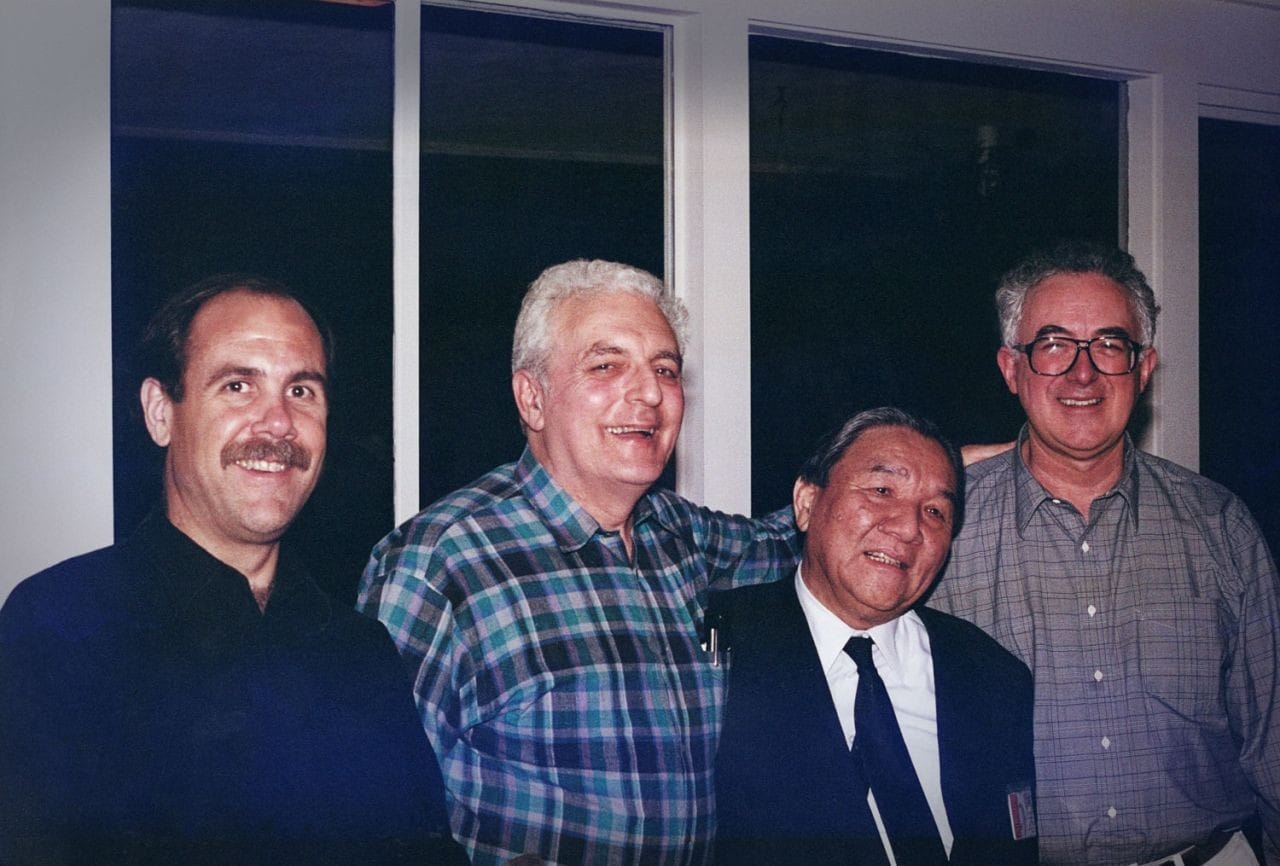
The Unsung Architects: While the episode focuses on the big-picture corporate handshake, the actual work of hammering out the protocol involved a massive ensemble cast of brilliant engineers. Guys like Tom Oberheim, the engineering teams at Korg and Yamaha, and Sequential Circuits' Chet Wood all spent frantic nights translating concepts between American and Japanese design philosophies. If you want a deep dive into the exact timeline of who was in what hotel room when the treaty was signed, the MIDI Association has a fantastic breakdown of the history here.
The Moog Coincidence: I dug into the history of Moog synthesizers for this episode because of a weird personal connection. Both of my parents worked for a precision engineering company called Moog in Western New York (my dad is retired now, and my mom is still there). During my research, I found out that Bill Moog (who started the aerospace and industrial company my parents worked for) and Bob Moog (the legendary synth pioneer) were actually first cousins. I love the idea that while one branch of the family was perfecting valves for aerospace engineering, the other was building electronic instruments, and my own family history was tied to the machinery all along.
Don't forget to subscribe, rate, and review wherever you listen 💚
Support the show at Buy Me a Coffee.
The Episode
Script
Imagine the year 1722.
In a room in Köthen, lit by the yellow glow of a candle, Johann Sebastian Bach is writing music.
His hand moves fast despite the shadows. A goose quill dipped in ink. A black dot resting on a hand-drawn line. He is pinning down something ethereal. He is writing down music that, at this exact moment, exists only in his head.
When the page is full, he sets down the pen.
Three hundred years go by, and you are sitting in an airport terminal in Chicago, or Denver, or Atlanta. Your flight has been delayed for three hours. The air feels thin and recycled. Your phone battery is at 4% and you can't find an open outlet.
Near your gate, there is a public piano. It is scuffed, missing a piece of veneer on the side with the words "PLAY ME" printed in chipped block letters across the music rack. You don't notice the stranger who sits down on the bench. You only look up when her fingers hit the keys.
Notes written by candlelight fill a sterile terminal full of tired people wearing earbuds. Across three centuries, a dead man's intentions live in the hands of a complete stranger. She has never met him. She cannot speak his language, but she knows what he meant. Memorized from marks printed on a page.
Sheet music is an invisible treaty. It belongs to no one, and so it belongs to everyone. We have all tacitly agreed that a dot on the third line of a treble clef is a B-natural, whether you learned to read it in an 18th-century German church or a suburban basement.
But 50 years ago, as musicians began shaping music out of raw electricity, that treaty fell apart. I'm Daina Bouquin, and this is Found in the Machine.
...
In the late 1970s, a black teenager named Juan Atkins is killing time in a Detroit music store. His grandmother is there too, slowly browsing through books of sheet music for her organ. Juan drifts. He wanders past the acoustic pianos into a small room in the back of the shop that is crammed with early synthesizers. He starts messing around with the dials. He is creating weird metallic sweeping frequencies. And he is completely captivated.
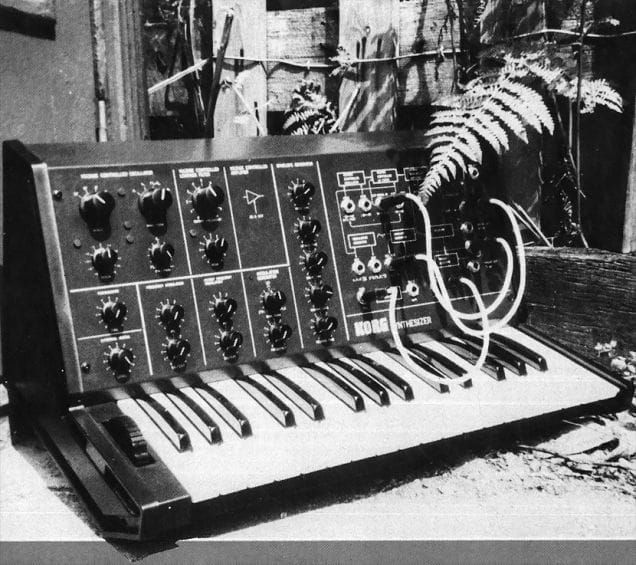
Eventually, Juan talks his grandmother into buying him his very first synthesizer. A Korg MS-10.
Picture this machine. It is a relatively small, heavy box, about a foot wide and a foot and a half long. It has a short, toy-like keyboard, a vertical bank of knobs, and on the right side a patch panel. A grid of tiny holes where you run short, colorful cables from one jack to another. To change the sound, you have to physically wire the electricity to a new path.
It could only play one note at a time. But inside that limitation, Juan Atkins found an entire universe. He coaxed whole songs out of this one little box. But there was a fundamental flaw with that whole generation of electronic instruments. Broadly speaking, machines built by different manufacturers could not talk to each other.
You could run a wire between a Korg and a Moog, and the electricity would cross between them perfectly. One machine would send a signal down the wire: "Play middle C!" But the machine on the other end would take that voltage and answer with a horrific shriek. Or just dead silence.
The problem was a lack of common language. Some companies built their gear so that adding one volt of electricity moved your sound up an octave. Others decided the voltage should double every octave. The higher you reached on the keyboard, the further the two sounds drifted apart.
Same wire, same electricity. Absolutely no agreement about what any of it meant.
In those days your options were bleak. You either stuck exclusively to one expensive brand, or you took a screwdriver, pried the plastic cases off your equipment, pulled out a soldering iron, and tried to force the machines to collaborate. Juan Atkins started making music under these constraints, with no way of knowing that two strangers on opposite sides of the planet were already working on a fix.
...
Dave Smith ran a synthesizer company out of San Jose called Sequential Circuits. That meant he spent his days building the machines people were prying open with screwdrivers. He looked at the chaos and decided that these instruments should just work together.
But he wasn't the only one looking for a way out of the mess. In the summer of 1981, an unexpected message crossed the Pacific. It came from Ikutaro Kakahashi, the visionary founder of a competing Japanese brand called Roland. In the cutthroat tech world of the 1980s, Kakahashi was calling for an unprecedented truce. He reached out to Smith with a radical premise. If they kept locking musicians into proprietary closed ecosystems, the entire electronic music revolution would stall. They needed a universal standard. So an alliance was born.
Fueled by Kakahashi's challenge, Dave Smith went to work mapping out a baseline protocol. By November of 1981, Smith was standing on a stage at an audio convention in New York City, presenting a technical paper for a prototype he called the Universal Synthesizer Interface.
For the most part, the American industry met him with total indifference. But over in Japan, Kakahashi was waiting. He rallied engineers from Yamaha, Korg, Kauai. The goal was this: create a digital language so simple and so incredibly cheap to implement that no manufacturer on Earth could afford to refuse it.
But the technical limitations of 1981 were brutal. The computing power inside a synthesizer microprocessor back then was microscopic. If you tried to send too much data down a wire, the machine's brain would choke and freeze. So they didn't try to send sound. They tried something much smaller. They shrank the entire musical universe into short, lean sentences that could travel down a cheap five-pin cable.
When you pressed a key, a tiny digital sentence shot down the wire. Each sentence began with two words: Note on. That was followed by a number for the pitch. 60, for instance, meant middle C. Then came a number for velocity, which was a measure of how hard your finger hit the plastic. And that number could only be one of 128 steps. A ceiling baked into how small the message had to be. The note rang out until you lifted your finger, and that's when a second message chased the first down the wire: Note off.
They called it the musical instrument digital interface. MIDI.
MIDI makes absolutely no sound on its own. It doesn't know what a piano is, or a guitar, or a drum. It is instructions. Sheet music written in electricity.
In 1983, MIDI made its debut at a trade show floor in Anaheim, California. Dave Smith and Ikutara Kakahashi set two instruments on a cloth-covered table. Smith's Prophet 600 and a Roland Jupiter 6. These were two fierce rivals built on opposite sides of an ocean. Machines that had never understood a single word from one another. Smith plugged that cheap five-pin cable into the back of both boxes. Then he sat down at his Prophet 600, stretched out his hand, and pressed a single key.
Across the table, the Roland Jupiter 6 answered. The exact same note. The exact same force. Note on. Note off.
The engineers watching from the crowd didn't cheer. Some were stunned into silence. Many were deeply skeptical. But then Smith and Kakahashi did the thing that almost nobody in the history of consumer electronics had ever done. They published the entire MIDI specification in the open. For anyone, completely free.
...
Over the next few years, MIDI exploded. And back in Detroit, by 1985, Juan Atkins had built himself a makeshift studio in his grandmother's basement.
He chained two drum machines straight to each other, a MIDI cable out of his Sequential Circuits drum tracks, and into his Roland TR-909. Two instruments made by rivals were suddenly sitting in a wood-paneled basement in Michigan, talking to each other in perfect harmony.
Juan Atkins layered those synchronized machines together with more sounds and recorded a song called "No UFOs". It is widely considered to be the first true techno track.
Techno left that Detroit basement and swept across the globe, filling warehouses in Chicago, clubs in New York, and massive open-air raves across Europe. The sounds mutated as computers grew more powerful, but for decades the underlying language of MIDI never changed.
But it took 30 years for the music industry to fully recognize what Dave Smith and Ikutaro Kakahashi had given away. In 2013, the Recording Academy awarded them a technical Grammy. Kakahashi was in his 80s by then. His son stood on the stage and accepted the tiny golden gramophone on his behalf.
For nearly 40 years, that original treaty held the digital music world together. It wasn't until around 2020 that the new version of MIDI arrived. You were no longer locked into one of 128 possible velocity measures. And the messages could now move bidirectionally. And it is completely backward compatible. The new MIDI still understands every word the old MIDI ever spoke.
...
Somewhere, right now, there is a young girl sitting at a keyboard. Not a grand piano, a $120 plastic keyboard with a black power cord running to a wall outlet. She is learning her very first classical piece.
It is almost always this one. Because it's all in the same key. And the pattern repeats over and over.
But she is 10 years old and she is getting bored. She has already been practicing for 15 whole minutes. So she stops playing and reaches her hand up to a small rubber button on the console. She presses it.
She plays the keys again, and this time the notes come out sounding like a heavy pipe organ. She presses the button again, and now it's a barque harpsichord. One more press, and the notes sound like they're coming from a spaceship or something.
No strings are vibrating inside that plastic box. No air is moving through a pipe. The keys are sending numbers down a wire, and a tiny silicon chip is translating them perfectly into sound.
She doesn't know that when Bach was writing those notes by candlelight, that he was actually thinking of an organ or a harpsichord. She doesn't know that the piano, as she knows it, didn't exist yet.
And the man who wrote those notes had absolutely no idea that an instrument like hers could ever exist in the physical world. But the notes land precisely where he put them.
Note on. Note off.
I'm Daina Bouquin, and this is Found in the Machine.
If you enjoyed this story, please rate and review this show wherever you listen. And if you'd like to dive deeper into any of these stories, you can sign up for my newsletter at notes.foundinthemachine.com. Thanks for listening.
Sources
Billias, A. (2024, December 21). MIDI history chapter 6: MIDI begins 1981-1983. The MIDI Association. https://midi.org/midi-history-chapter-6-midi-begins-1981-1983
Doyle, T. (2024, November). Classic tracks: Model 500 'No UFOs'. Sound on Sound. https://www.soundonsound.com/techniques/classic-tracks-model-500-no-ufos
MIDI Manufacturers Association. (1996, February). MIDI 1.0 detailed specification (Version 4.2.1). https://drive.google.com/file/d/1ewRrvMEFRPlKon6nfSCxqnTMEu70sz0c/view
Robehmed, N., & Gaston, R. (2019, November 8). A brief history of MIDI. Perfect Circuit. https://www.perfectcircuit.com/signal/history-of-midi
Stewart, D. (2014, December 3). Technical Grammy Award: Ikutaro Kakehashi and Dave Smith. Recording Academy. https://www.grammy.com/news/technical-grammy-award-ikutaro-kakehashi-and-dave-smith/
Ultimate guide to using MIDI in music production. (2023). Avid. https://www.avid.com/resource-center/what-is-midi-musical-instrument-digital-interface