
Tidal Forces

I swim in open water. I used to swim in the ocean all the time, but for the last two years it's been mostly lakes. Even with this shift though I never deleted the app on my phone that tells me the tides and the phase of the moon. I have it set to a buoy near the Boston harbor. I used to check it almost daily but now I just peak at it when I'm curious.
I thought of the app on my phone while I was listening to World War II with Tom Hanks, the episode about Operation Overlord. I got thinking about it because I just could not wrap my head around what you would have to do to figure out the tides and align everything the way they had to for D-Day. Before you could just tap an icon, what did you really have to do?
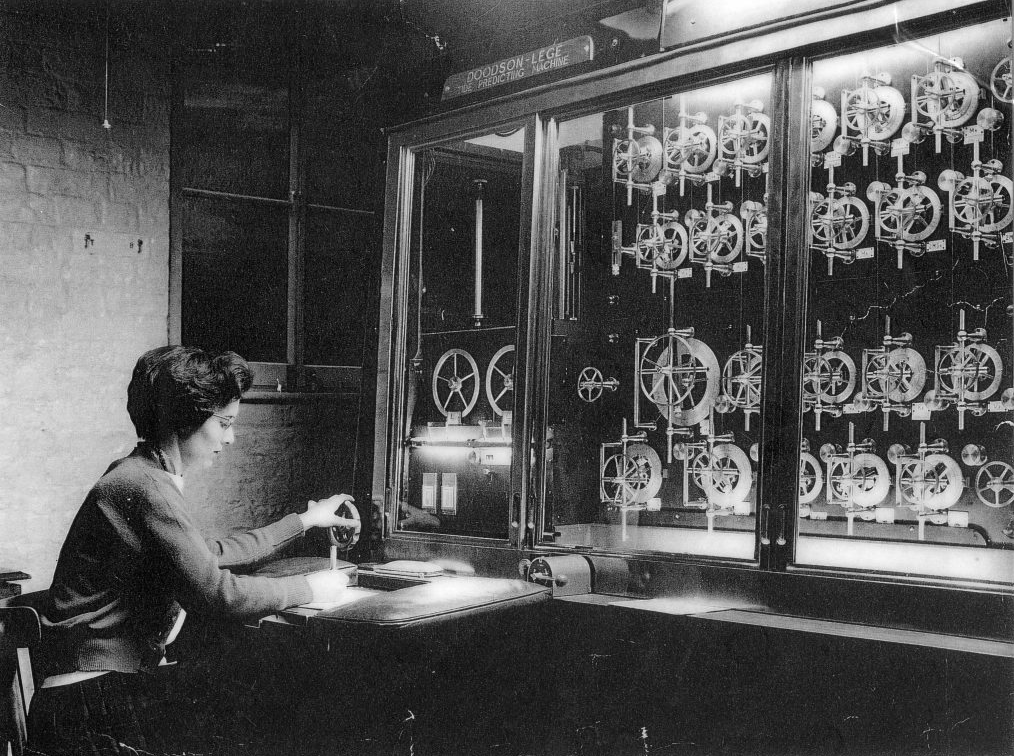
That question led me to the tide predicting machines. I saw the photographs and I was blown away. Brass and gears and dials, a machine built to compute the ocean. I fell all the way down the rabbit hole. And at the bottom of it was Arthur Doodson and six young women working as "Computers."
I have a lot of familiarity with human computers from my past work at the Harvard-Smithsonian Center for Astrophysics. But I'm always surprised whenever I come across a room full of women doing calculations in an important historical context. It's weird because I really shouldn't be surprised anymore, but there it is.
The women at the Bidston Observatory did the calculations and ran the machines that produced the tide tables for D-Day. And I could not find their names.
There were only six of them, so surely, somewhere, someone knew who they were.
I read everything I could reach. I wrote to the Observatory directly, on the off chance they held something I had not seen. They did not. The likeliest answer is that the names sit in undigitized files that were moved into an archival collection after the Observatory was sold, if they were written down at all.
It was difficult and honestly intimidating to write about a topic that is so deeply studied and that came with so many emotions. I wanted this to be a story about people who calculated the tides, but I didn't want them to overshadow the men on the beach. I hope I threaded that needle.
What didn’t make it in
Two machines, two rooms
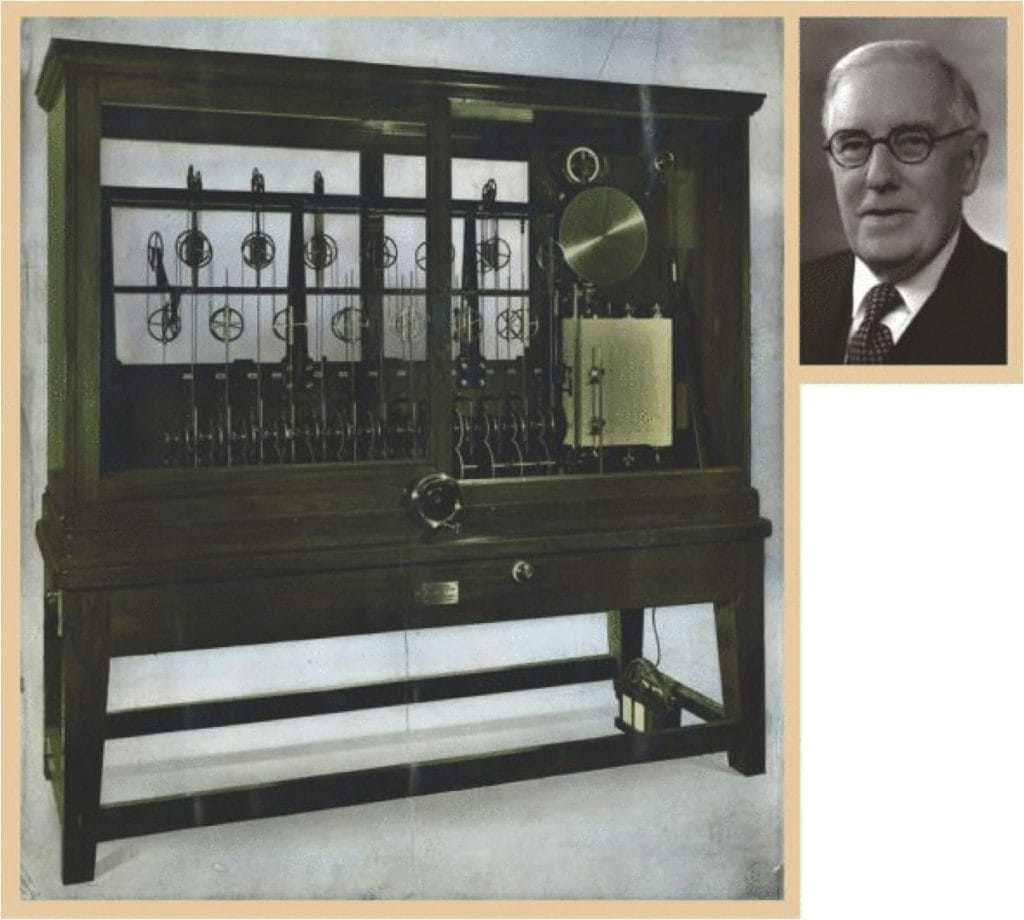
The observatory had two tide predicting machines, and they were not kept together. They were housed in separate rooms on purpose, so that if a bomb found the building there was a chance one would survive. A German propagandist named Lord Haw-Haw had promised on the radio that the Observatory would be targeted, so this was not paranoia. It was planning. They took real care to make sure at least one machine would come through.
The other half of the timing
The tide tables answered only part of the question. The weather answered the rest. Group Captain James Stagg, Eisenhower's chief meteorological adviser, and the rival forecasting teams under him read a narrow break in a violent storm and pushed the invasion from June 5 to June 6.
I left the meteorologists out because the weather is its own enormous story, but they deserve the mention here.
The names in the photograph
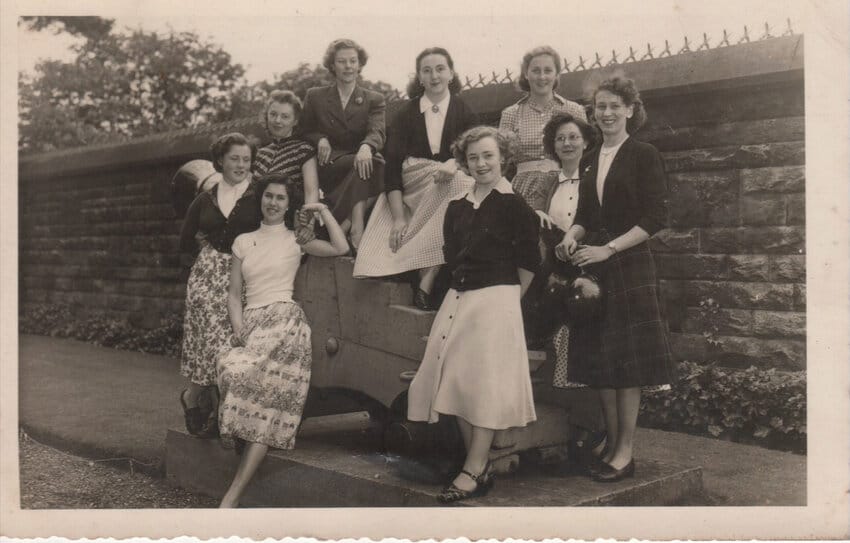
Photo description from the Bidston Lighthouse:
"The ladies in this post-war photograph of the Observatory Staff by the One O’Clock gun are, proceeding clockwise from Valerie Doodson at the front left:
Valerie Doodson née Boyes, Jean Harman née MacFarlane, Dorothy Ainsworth, Eunice Murrell née Heath, Barbara Trueman-Jones, Margaret Lennon née Weston, Margaret Ireland née Wylie, Sylvia Asquith née Brooks, and Olwyn Branscombe."
When I found this photo I was so excited, until I read the full description. They are the wrong women. The photograph is from after the war. According to Angelina at the Bidston Observatory (which is now an artistic research center) it was taken in 1953. I didn't get Angelina's message until after recording otherwise I would have been more precise about the post-war date.
Some of the women in the photo definitely did not work at the Observatory during the war. Valerie Doodson married into the family in 1957. It's unclear if any of the other women had been at the Observatory in 1943/1944.
Barbara Henshaw
In March of 2025, someone named Jessica left a comment on a Friends of Bidston Hill heritage page. Her grandmother, Barbara Henshaw, had worked at the observatory, she thought sometime in the 1940s or early 1950s. Barbara was 94 at the time. Jessica was looking for staff photographs to show her, and remembered her mentioning Dr. Doodson.
I could not verify or find a trail on any of this without more time and more resources than I had. And the dates, if they are right, they likely place Barbara just after the war rather than among the wartime six. She may actually be Barbara Trueman-Jones before a name change. But that is exactly the shape of this whole story. A name surfaces in a comment thread, attached to a woman who loved the work, and the record does not quite catch her before she goes.
From the Field
A note I have not made before, and probably should have.
This episode centers people whose names went unrecorded because no one thought to write them down. There is an uncomfortable rhyme in trying to recover them now, because a great deal of what I would need sits behind a wall, and the wall is money.
I am not affiliated with a university anymore, so I have no academic library access. The peer reviewed articles I wanted ran anywhere from 35 to 50 dollars each (and they weren't available via other sources). Joyce Scoffield's history of the observatory is out of print, and I could not justify the cost of a copy. One sold on Ebay last month for $175 USD.
The records that might hold the six names are likely in archives that have never been digitized, which means the only way to reach them is time, and time is one thing I don't have, because this is not my full time job. Even the genealogy tools that might help cost money. So does hosting the show. So does hosting this newsletter.
I make this for free, and I intend to keep it free to listen to. But if you are able, I appreciate anything that goes in my Buy Me a Coffee. For the next set of names.
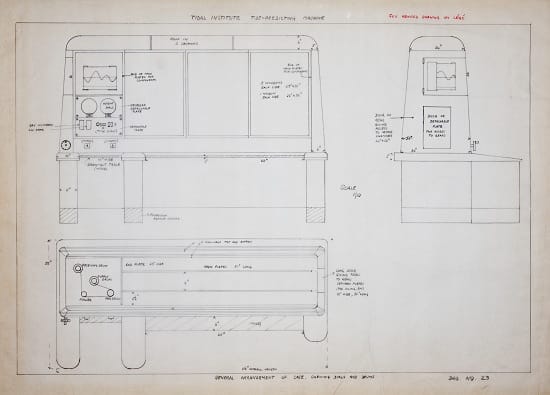
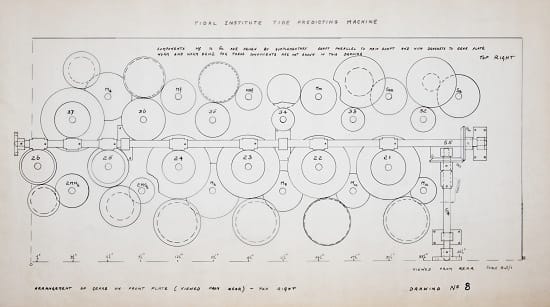
The original technical drawings for the Doodson-Légé Machine via https://historicsealevel.wordpress.com/2012/06/07/tide-predicting-machines/
Don't forget to subscribe, rate, and review wherever you listen 💚
Support the show at Buy Me a Coffee.
The Episode
Script
A war is on. And you are standing in the dark.
It's 1943. You are on the roof of a building near Liverpool, wrapped in a heavy trench coat that's losing a fight against the damp, biting cold. The rim of a tin helmet presses hard against your forehead. In your numb hands you hold a bucket of water.
You are looking up into the blackout, waiting for incendiary bombs to fall. You're up here because a Nazi propagandist on the radio has promised that by morning, this building, the Bidston Observatory, will be no more.
Bombs do fall in the area. Windows shatter. But the observatory stands. And when your shift on fire watch ends, you go back downstairs, deep into the bunker-like basement to fight the Second World War with a pencil.
Because you are a computer, and the Navy needs you.
I'm Daina Bouquin, and this is Found in the Machine.
Before the word computer meant a machine on a desk, it was a job title. Often the job title of a woman. In this case, the job title of six young women in a basement who are hired for their diligence, skill with numbers, and neat handwriting.
On their desks are papers covered in columns of numbers, pages and pages of them. Hourly measurements of water levels taken at ports and harbors across Britain and beyond. Some of the data is decades old. Some arrived by courier this morning marked urgent. They are responsible for predicting the tides.
They are working under a man named Arthur Doodson. Arthur is 53 years old, and he is a brilliant mathematician. He is also deaf. He cannot hear the German bombs exploding outside, and he cannot hear the metallic whirr of the machines in the other rooms. But in his own way, Arthur Doodson listens to the ocean better than anyone else on Earth.
To Arthur, the tide is not chaos. It is a cord. A cord made of the moon and the sun and the shape of the ocean floor and the shoulder of every continent the water leans against. Pull those notes apart and you have the variables that make the tide.
Scientists realized this in the nineteenth century. They realized that if you could measure each of the influences that shape the water, you could predict what the ocean would do next. But you needed the celestial pulls, the local quirks of the coastline, the depth. You needed these harmonic constituents.
Even if you had those measurements though, you couldn't do this work quickly, and not in your head. So they built mechanical marvels.
The Bidston Observatory has two of them. One was the Bidston-Kelvin machine, a descendant of Lord Kelvin's original tide predictor design installed for Doodson in the 1920s. The other was the Roberts-Légé machine, built in 1906 and later acquired for Bidston. It weighs over a ton.
They are analog computers. Glorious, intricate contrivances of shining brass and steel filled with wheels and gears and pulleys. The way they work is mesmerizing. There is a wire winding its way over and under dozens of pulley wheels. Each wheel represents a different force. The pull of the moon, the pull of the sun, the wobble of an orbit. The women set the dials and turn a crank to run the ocean forward in time. It takes four hours to draw a year, but the setup, the work to tell the machine where to start, takes days.
So day after day the women look at pages of hourly water levels. They lay cardboard stencils with cutout holes over the data, multiplying the numbers that show through by specific weights. They do the differencing. They do the smoothing. Down in the basement they find the harmonic constants. Then they set the brass dials and crank the wheel. The wire pulls tight, moving a pen across a rotating paper drum, drawing a rolling line. The shape of a future ocean, and the time it will take to rise.
Across the English Channel, German Field Marshal Erwin Rommel paces the sands of France. He looks out at the water. The tides are massive. The vertical distance from low to high tide exceeds six meters, nearly twenty feet. When the tide comes in, it rushes at terrifying speed. The water rises roughly a foot every 15 minutes.
Rommel tells his officers the Allies will come at high water. He cannot fathom that they would force soldiers to run across hundreds of yards of open, muddy beach under heavy machine gun fire. He prepares for a high tide invasion. He orders the beaches sewn with iron.
Thousands of obstacles and mines, welded steel crossbars taller than a man, wooden stakes angled at the sea, tipped with more mines and captured artillery shells. Three-ton Belgian gates rolled into the shallows.
He places them exactly where they will be hidden just beneath the surface as the dark water rises to midtide, ready to rip the bottoms out of Allied landing craft. To detonate when the ships come near.
But Allied reconnaissance planes photograph the traps. The commanders realize that a high tide landing is a death trap.
They realize they have to land at low tide, so the demolition engineers can see the steel obstacles and blow them to pieces. But the tide must also be rising, rising fast so the boats can unload their men and float back out without getting stranded on the sand. And they also need a bright, late rising moon. Otherwise the paratroopers won't be able to see their drop zones. And the daylight. They need an hour of daylight to bombard the coast before the troops hit the sand. Daylight has to coincide with low tide.
And the invasion is huge. It spans five beaches Utah, Omaha, Gold, Juno, and Sword. The water sloshes through the English Channel like a funnel. The exact minute of low tide differs by more than an hour from one end of the invasion to the other. The landings have to be meticulously staggered. They need to know exactly what the water will do. They need someone to tell them when the earth will cooperate. They need the moon, the sun, the dawn, and the tides to align.
On October 9th, 1943, Arthur Doodson receives a three-page handwritten letter marked MOST URGENT. It is from Commander William Ian Farquarson, the Admiralty's superintendent of tides. Farquarson cannot tell Doodson the biggest secret of the war. He cannot say "Normandy." Instead, he provides what data he can for a location he calls "Position Z."
He writes quote, "The place is nameless and the constants inferred. There is in fact very little data for it. I am gambling on the inferred shallow water constants giving something like the right answer."
Doodson looks at the numbers. Constants inferred from sparse shallow water readings of nearby ports gathered by British reconnaissance teams in small boats and submarines in the night. Arthur knows the tides and guesses the location of Position Z, but he says nothing. He and the six women just get to work.
They do the painstaking arithmetic, the harmonic analysis. They calibrate the brass wheels. They turn the crank. The pulleys rise and fall. They carefully translate the machine's raw output into tide tables. They map the future of a nameless coast. There are only three days in June 1944 that work. The fifth, the sixth, and the seventh.
General Dwight D. Eisenhower chooses June 5th for the invasion, but a massive storm forces a delay. It doesn't matter what the tides do if the air won't cooperate. Rommel sees the same rough weather. He looks at the tides and concludes they are completely wrong for an invasion. Believing the Allies won't come, he leaves his headquarters and drives to Germany to celebrate his wife's birthday.
But the Allies do come.
On the morning of June 6, 1944, the largest amphibious invasion in the history of the world arrives on the coast of Normandy.
The tide predictions hold. Water comes rushing in, rising and rising.
On Omaha Beach, the American demolition teams have only minutes to blast their channels before the ocean swallows the traps.
It is horrific. They knew it would be.
Men in wool uniforms wading through cold water, weighed down by their packs, running toward the cliffs. Toward the wire. Toward the guns on the bluffs. Machine gun fire from the heights. The blast of heavy artillery, constant and deafening. Men waiting for their turn to run, sitting in small boats, breathing in engine fumes, watching their friends fall.
More than half the engineers on Omaha are killed.
And the fast rising water lifts the landing craft exactly as planned. They drop their ramps, they unload the troops, they reverse back into the channel. The tide does what they said it would do.
The liberation of Europe was paid for in blood and secured by the unimaginable bravery of the men who plunged into the surf and ran into a killing field.
But beneath the battle, beneath the smoke and the cacophony of the guns, there was a rhythm, a quieter one, dictated by the moon and the sun and the shape of the ground the men ran across. It was drawn in pencil in a basement near Liverpool by a deaf mathematician and six young women whose names were left off the public records.
But they did have names. And if you look hard, if you look really hard, you can find two of them: Joan Rossiter and Estelle Gilbert.
Their names are mentioned in reference nine of a Physics Today article published in 2011, sixty-seven years after D-Day. The author had spoken to them a decade earlier and wrote down their names. The other four are unknown.
We only know the names of some of the women who came later, and we only know them because they wrote the records themselves. They wrote down what it was like to operate the machines. They smiled in a group photo taken sometime after the war.
Joan Rossiter and Estelle Gilbert are not in the photo.
The women who helped calculate the tides in 1944 were swallowed by a job title. They were just Computers. They were diligent and good with numbers. They had neat handwriting. And when the tide came in on the morning of June 6th, 1944, they were already working on the next tide. And the one after that.
Because a war was on. And the Navy needed them.
I'm Daina Bouquin, and this is Found in the Machine. If you want to support this show, leave a rating or a review wherever you listen. Or share this episode with a friend. And if you'd like to hear what didn't make it into this episode, or see that group photo of the women who calculated the tides after the war, go to notes.foundinthemachine.com. Thanks for listening.
Sources
Bidston Lighthouse. (2017, March 8). Women in the workplace. http://www.bidstonlighthouse.org.uk/women-in-the-workplace/
Bodcsealevel. (2012, June 7). Tide predicting machines. Rescuing Historical UK Sea Level Data. National Oceanography Centre. https://historicsealevel.wordpress.com/2012/06/07/tide-predicting-machines/
Carlsson-Hyslop, A. E. (2010). An anatomy of storm surge science at Liverpool Tidal Institute 1919-1959: Forecasting, practices of calculation and patronage [Doctoral dissertation, University of Manchester]. NERC Open Research Archive. https://nora.nerc.ac.uk/id/eprint/14623/
Curatola, J. (2026, May 28). Pressure, the D-Day weather forecast story. The National WWII Museum. https://www.nationalww2museum.org/war/articles/pressure-d-day-weather-forecast-story
Friends of Bidston Hill. (n.d.). Bidston Observatory. http://www.bidstonhill.org.uk/heritage/trail08/
Parker, B. B. (2011). The tide predictions for D-Day. Physics Today, 64(9), 35-40. https://doi.org/10.1063/PT.3.1257
Scoffield, J. (2016, November 9). My early life at Bidston Observatory. Bidston Observatory in Retrospect. http://www.bidstonobservatory.org.uk/early-life/
Wikipedia contributors. (n.d.). Lord Haw-Haw. In Wikipedia. Retrieved August 4, 2026, from https://en.wikipedia.org/wiki/Lord_Haw-Haw
Woodworth, P. L. (2020). Tide prediction machines at the Liverpool Tidal Institute. History of Geo- and Space Sciences, 11(1), 15-29. https://doi.org/10.5194/hgss-11-15-2020
Woodworth, P. L. (2015, December). Bidston Observatory and its tide prediction machines. Bidston Observatory in Retrospect. http://www.bidstonobservatory.org.uk/tide-prediction-machines/