
With Heart

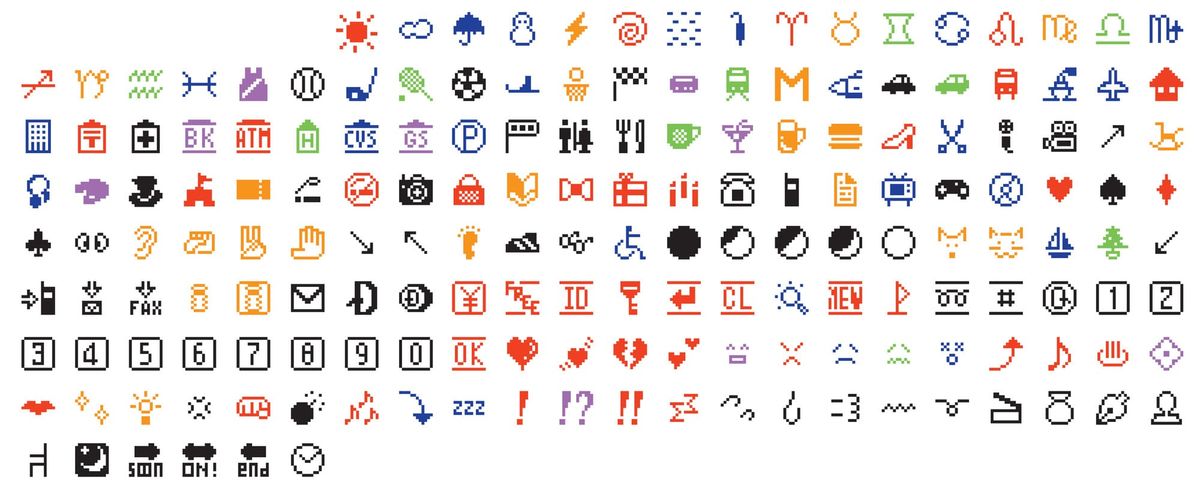
I decided to write this episode after I found out about emoji hacking and thought it might make a good story for my Patreon series, Found in the Margins (stay tuned for that to be the topic of the next Margins episode). It was just so strange. It got me thinking more about emoji in general and made me wonder where they started.
The answer was actually kind of convoluted in ways I didn't expect, because tiny digital images developed for communication are a much wider category than emoji, but I wanted to focus in on what I saw on the emoji keyboard as that's what came to mind for me when I thought about emoji.
And I honestly thought I was going to end up writing an episode about unicode as that's the essential technology, but to my surprise, I found myself reading about Japanese pager culture in the 90s. That's when I got the image in my head for the cold open in this one. I just love the idea of teenagers flirting via pagers. I never had a pager myself but I remember getting my first flip phone in high school and it made me feel a little nostalgic.
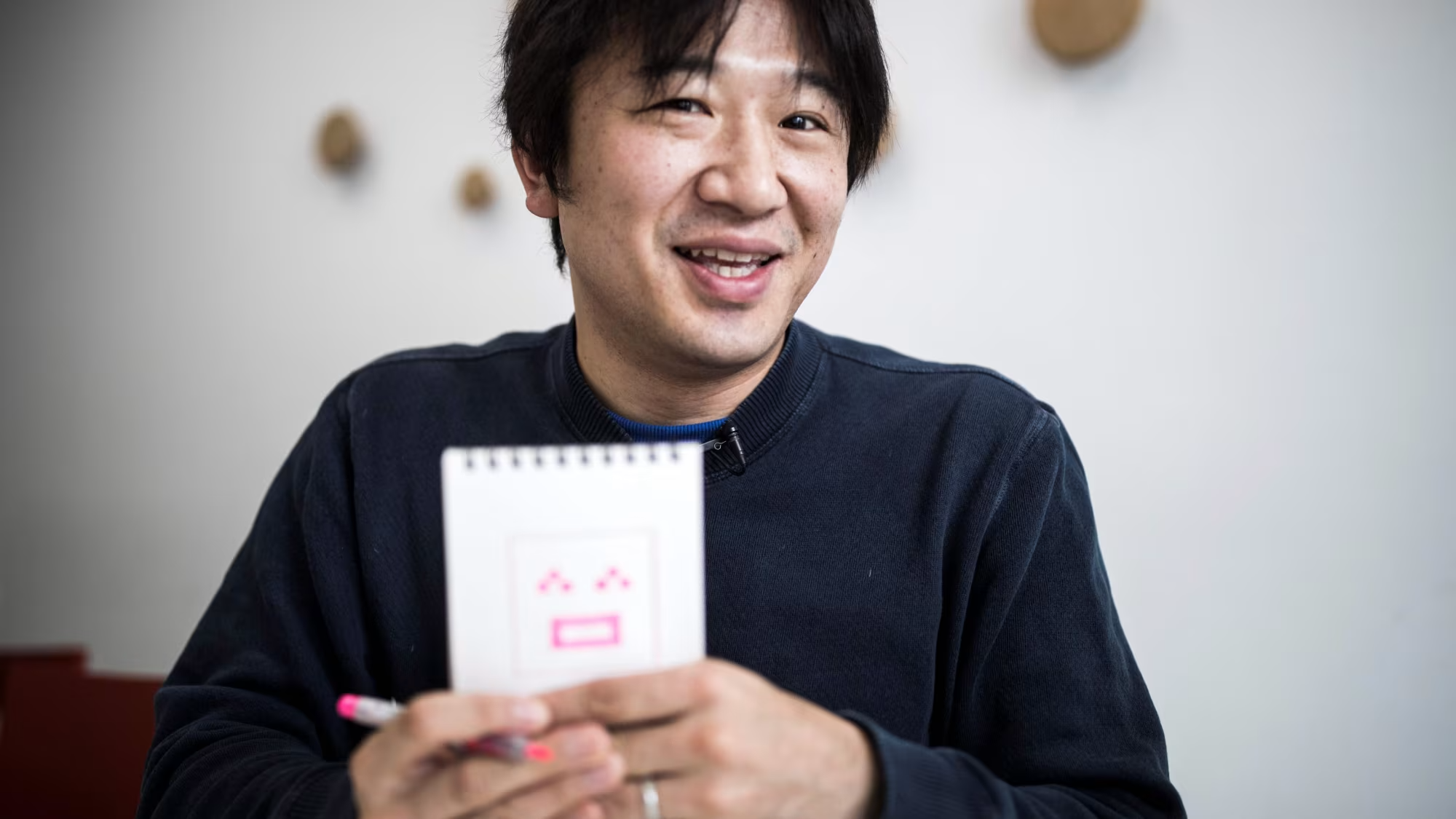
Kurita was also a surprise. I guess I thought emoji were probably designed by graphic designers and went through a lot of iteration and user feedback or something. The idea that it was a guy in his mid-twenties without any design training drawing them up within about a month is just sort of wild.
Anyway, I hope you enjoy this story as much as I enjoyed writing it 🖤
What didn't make it into this episode
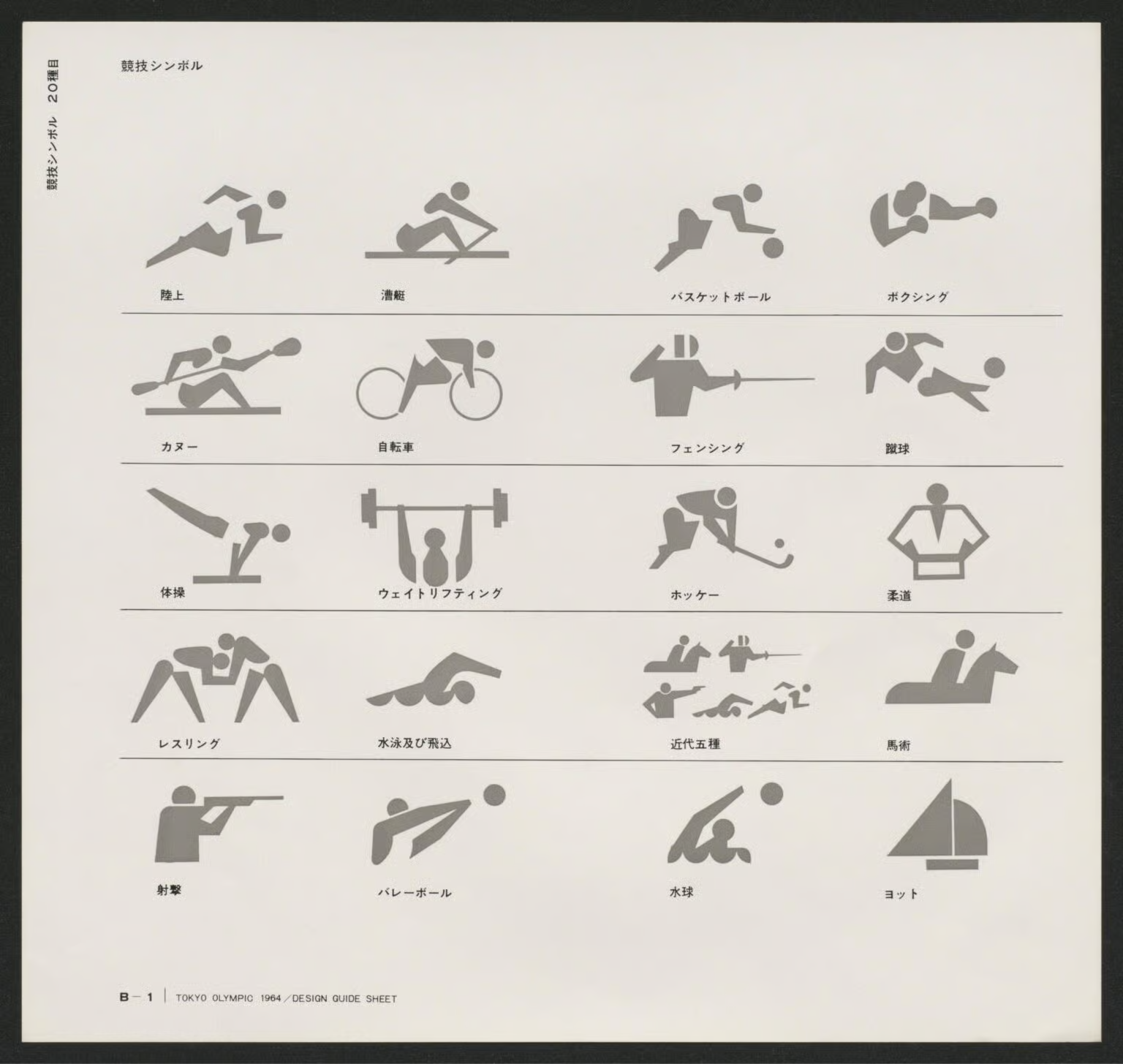
- Pictograms in the 1960s: Small pictures designed to cross language barriers have a long history of their own, and Tokyo played a big part in it. The 1964 Tokyo Olympics were the first international sporting event to use a coordinated set of pictograms made for visitors who couldn't speak Japanese, inspired by the isotypes of Austrian designers Otto Neurath and Gerd Arntz. One of my favorite details is that the designers struggled with symbols like showers and Western-style toilets because they knew these existed in hotels overseas but didn't know what they looked like.
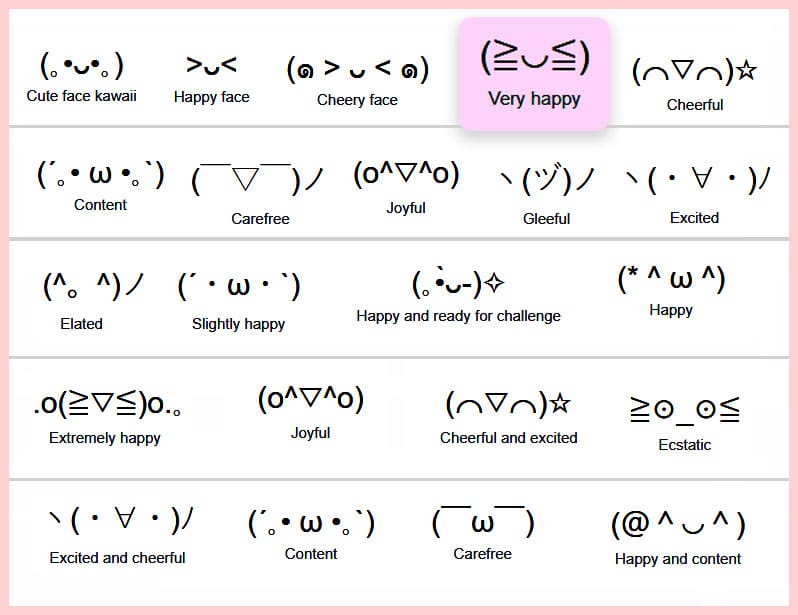
- Emoticons and Kaomoji: On September 19, 1982, Carnegie Mellon computer scientist Scott Fahlman posted a message to the university's bulletin board suggesting :-) and :-( as markers to tell jokes apart from serious comments. In Japan, kaomoji took hold, which use the larger character sets needed for Japanese and can be read without tilting your head.
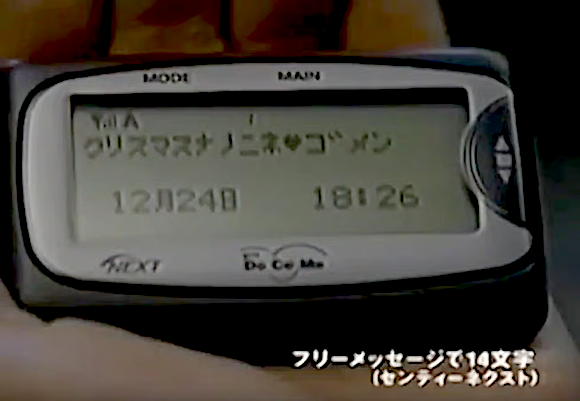
- From pagers to cell phones: The Pocket Bell faded fast once mobile phones spread. NTT, the company that first introduced pagers in Japan, discontinued its pager service in 2007. The last provider, Tokyo Telemessage, ended service in September 2019, noting that users had dwindled to 1,500 and that it had stopped manufacturing the devices 20 years earlier.
- The retirement of the original set: Kurita's emoji evolved over the years before disappearing entirely. Docomo's set received its final update in 2013 with 698 designs, and in 2025, NTT Docomo announced it would phase out its proprietary emoji, ending a 26-year run. Interestingly, Docomo never trademarked the designs. Kurita said legal counsel decided that at 12 pixels on a side, there wasn't much room for individual expression, which allowed competitors to adopt them and helped emoji snowball into a nationwide phenomenon.
- The Unicode Consortium: Anyone can submit a proposal for a new emoji for free, but successful submissions must show expected frequency of use, broad cultural relevance, and distinctiveness from existing emoji. Proposals are reviewed by the Unicode Emoji Standard & Research Working Group. Once Unicode approves new emoji, companies like Apple, Google, and Samsung each design their own versions, which is why the same emoji can look so different from phone to phone.
- The slow spread outside Japan: Apple released an emoji keyboard in November 2008, but it was restricted to Japan and could only be unlocked elsewhere through third-party apps. At least early on, both the sender and the receiver had to follow the unlocking instructions for emoji to work. It wasn't until iOS 5 in 2011 that anyone in the world could turn on the emoji keyboard without a workaround. Android didn't get an emoji font until July 2013.
All of these were fascinating, but they felt more like explainer material than story.
The Episode
Script
Imagine it's nineteen ninety-five, and you're sixteen in a bedroom outside Tokyo.
It's very late. The house is quiet, but you're awake, sprawled on your bed staring at your pager.
It's a little gray plastic thing, small enough to close your fingers around, with a narrow screen to display a line of numbers.
Everyone at school has one. At lunch break, there's a line at the payphone by the gym. Kids waiting their turn to press the keypad to send messages across the city.
The one in your hand buzzes. O. Ya. Su. Mi. It means good night.
But after the numbers there's something else. A small pixelated shape. A heart.
Now, a pager only listens. You'd need a phone to send anything back, and the phone is in the hallway, and it's after midnight, and you don't want to wake your parents.
So you lie there with the pager in your hand and watch as the tiny screen goes dark. You press the button again and it lights up.
0833. A heart.
The screen goes dark. You press it again.
Good night, with a heart.
I'm Daina Bouquin, and this is Found in the Machine.
--
In Japan, the pager was known as a pocket bell. A doorbell you could carry. Someone dialed your number and it rang wherever you happened to be. A doctor could be called away from dinner. A salesman could find out that the office needed him. It was useful.
The early devices only summoned you, but later they added a display so the caller could leave a phone number for you to call back. You'd find a phone, dial the number, and ask what they wanted. But the display didn't know whether or not the numbers were a telephone number. It would show whatever numbers the caller entered. And Japanese offers quite a few ways to read a number.
Like eight could supply the sound ha from hachi or ya from yatsu. By borrowing sounds, shortening them, and allowing a little latitude, you could make a string of digits sound something like a word.
You could make them mean something.
The number 4649 meant "please". 3341 was "Lonely". 39 means "Thank you." 14106 is "I love you."
This kind of number wordplay is called goroawase and there's nothing from the manufacturer to tell you how this works. This wasn't the device's intended purpose. But you could have a whole conversation this way.
People even had what they called bell friends. They knew one another by page or number and sometimes without knowing a name or even meeting in person. You could recognize someone by the messages they sent, by the way a conversation picked up again. The numbers you sent through a payphone could reach a person you wouldn't recognize if they were waiting just behind you. Pocket bells got so popular that some high schools banned students from bringing them to school.
Then, in 1995, the company NTT Docomo released a pocket belt that could send a small picture of a heart along with the numbers. Pagers with the hearts were a hit. The next year, pager contracts in Japan peaked at over 10 million.
Then Docomo made a new, more advanced pocket bell. It was intended to be a business device for people who needed to call the office. And it could display kanji. It could display the Latin alphabet. But the heart was gone.
So young users started leaving Docomo for competing services that still had it. A man named Shigetaka Kurita worked at Docomo. He had sold pagers and he remembered watching school girls switch to other services when they couldn't send the heart anymore. Years afterward, he was still describing his surprise at how much difference that one symbol had made.
But Kurita didn't stick to pager sales. By the late 1990s, he was in his mid-20s and working for Docomo, helping develop something called i-mode, a service that would allow people to check information on the little screen and send a message without having to find a phone first.
With i-mode, there would be more room for words, but not much more room. An i-mode email could only hold 250 Japanese characters. So Kurita proposed including things like the heart. He had already seen what happened when one was taken away and reasoned that more could be useful. And despite Kurita having no training in graphic design, Docomo agreed, and they gave him five weeks to design the images.
In five weeks, he needed to work out which images would improve communication. What places, concepts, emotions, and things could prevent arguments. Which ones could help people understand each other. And he had to figure out how to draw them in a tiny space. Each one could be just twelve pixels high and twelve pixels across.
Curves had to become small staircases. Circles had corners. And there was a problem with the number 12 that Kurita would remember long afterwards. There was no middle square. Count six columns from the left and six from the right, and you meet at a seam. If you wanted a one-pixel wide line to run down the center of your image, like you would if you were drawing a heart, there is nowhere to put it. You had to shift the whole design over.
And he needed people to recognize these things at a glance on a screen you could cover with your thumb. So he drew pictures people already knew. The symbols on public signs. The sun and clouds from weather forecasts. He pulled from Manpu the shorthand of manga, where a drop of sweat could tell you someone was nervous.
He added an umbrella, a train, phases of the moon, a high-heeled shoe, a sailboat, a film projector. People would later mistake the projector for a pufferfish. He added an M to mean metro, but some people used it to mean McDonald's.
Kurita assembled 176 images. He thought they would be given to designers to refine them, but they went out into the world as is. They were called emoji. E means picture, and emoji means character.
Kurita's emojis were early, but others soon followed. Different companies developed their own, but there was a problem. The machines didn't all speak the same language. When you send a letter A, you aren't really sending the shape of an A. You are sending a code. The receiving machine sees that code and knows this is an A. It can draw the A in whatever font it uses, but it's still an A.
Emoji could work the same way, except different companies had created different codes. One phone might know which code meant airplane, and another might have no airplane at all. So instead of an airplane, you might receive a blank square or nothing.
This was exactly the kind of problem Unicode was built to solve. The Unicode Consortium assigns characters shared codes so that different machines can agree on what they're looking at. There was an early proposal to encode Docomo's emoji in Unicode in 2000, but it went nowhere.
Then around 2007, engineers at Google began pushing for a standardized solution. Apple soon joined the effort. Their products were arriving in Japan, and users already expected to be able to communicate with these little pictures. So in 2010, Unicode 6 encoded hundreds of the symbols used as emoji. But the heart didn't need a new code. It was already there.
The heart's Unicode assignment is U+2764. It entered Unicode years earlier among the dingbats, a collection of decorative black typography symbols. And Unicode names don't change. So the formal name for the red heart at the end of your late night message is HEAVY BLACK HEART.
In 2016, Kurita's 176 images entered the collection of the Museum of Modern Art in New York. He paid his own airfare to go see them. The museum exhibited the little designs in its lobby and credited him by name.
Those tiny designs made to fit into a 12 by 12 pixel grid on a screen were now something you could go to an art museum to see. People look at them the way they look at paintings. And you can watch them look and wonder what they see.
Because we make them mean something.
When you send a skull emoji, are you one of the people who use it for Halloween? For danger? For goth aesthetics? Or are you laughing? Is it so funny that you're dying? Do you see the flame emoji and think the sender is angry? Or are they giving you a compliment?
Has an emoji ever kept you up late?
--
You fell asleep with the pager in your hand.
By the time you get to school, there's already a line at the payphone. You stand in line, rocking a little, onto your toes and back as you wait. Then it's your turn.
You type 0840.
Your finger hovers for a moment. And then you hit 88.
You hang up, and somewhere nearby a pocket bell wakes.
0840 with a heart.
Good morning with a heart.
I'm Daina Bouquin and this is Found in the Machine.
--
If you enjoy my stories, please consider leaving a rating or a review wherever you listen. They really help others find the show, and I read all of them. And if you're interested in getting more content from me, you can join the show's Patreon. Just go to foundinthemachine.com/support to find the link to the Patreon and other ways you can support the show. Patreon members get access to Found in the Margins, my mini bonus episode series. Recent episodes have covered things like CRT Sea Glass and Chip Graffiti. Thanks as always for listening. I'll see you next time.
References
McLaughlin, A. (2018, May 2). Emoji: Documenting design history’s accidental masterpiece. Design Week. https://www.designweek.co.uk/issues/30-april-6-may-2018/emoji-documenting-design-history-accidental-masterpiece/
McCurry, J. (2016, October 27). The inventor of emoji on his famous creations and his all-time favorite. The Guardian. https://www.theguardian.com/technology/2016/oct/27/emoji-inventor-shigetaka-kurita-moma-new-york-text
Museum of Modern Art. (2016). Inbox: The original emoji, by Shigetaka Kurita. MoMA exhibition page. https://www.moma.org/calendar/exhibitions/3639
Museum of Modern Art. (2025). Shigetaka Kurita: Emoji. 1998–99. MoMA collection entry. https://www.moma.org/collection/works/196070
Okada, Y. (2018, December 3). ポケベル全盛期、わたしは女子高生だった [I was a high school girl during the pager boom]. ITmedia NEWS. ITmedia article. https://www.itmedia.co.jp/news/article/1812/03/1181203094/
The Unicode Consortium. (2026). Unicode emoji (Unicode Technical Standard No. 51, Version 18.0). https://unicode.org/reports/tr51/