
Working in the Dark

This episode started because I wanted to know where the microchip manufacturing process actually begins. I had been watching Instagram reels where people were putting small electronics components under microscopes and I got curious about how we make things that small. The answer I got was that we start by creating silicon ingots, and that was just such an unsatisfying answer. I couldn't not look into it.
That's how I learned about Jan and EUV light and the tin. I couldn't get it out of my head, so the story got prioritized.
What Didn't Make it In
Jan's history is complicated and the records are fragmented. I didn't get my hands on a full English version of Tomaszewski's Jan Czochralski Restored before the episode went out, so I know there's a lot I don't know to even leave out. But these are things that were in the original script. I decided to share there here instead to keep the story from sprawling.
Railroads and B-metal
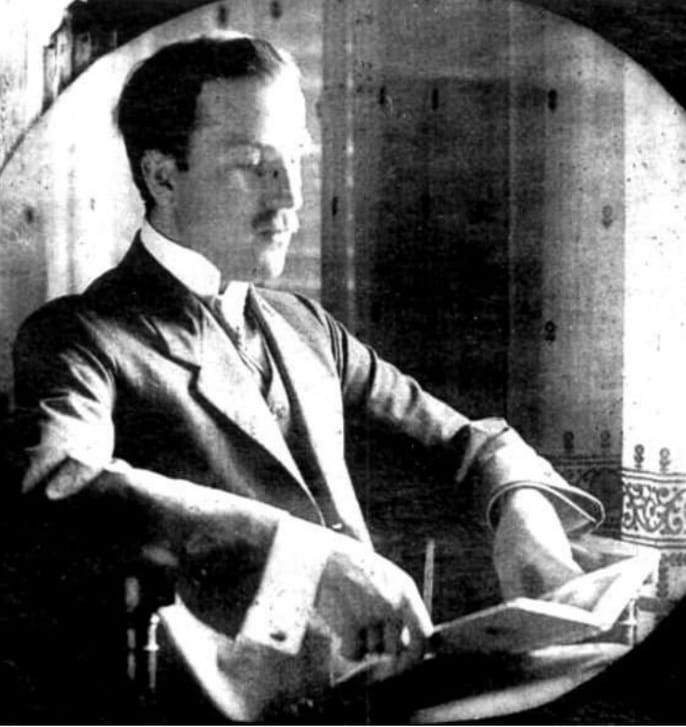

By the early 1920s, Jan's work in metallurgy had expanded well beyond the crystal-pulling method he accidentally discovered in 1916. He was now focused on a problem that mattered enormously to the transportation infrastructure of his time: the tin used in railway carriage bearings. His solution was an alloy he called Bahnmetall, known in English as B-metal. It was a less costly and more durable substitute for the tin used in bearing assemblies, particularly for railroads, which were the dominant transportation network of the era.
B-metal allowed trains to travel at higher speeds and played a significant role in the development of rail transport in Germany, Poland, the United States, the United Kingdom, and the Soviet Union. The invention made him wealthy and well-known. It also, eventually, made him enemies. Years later, a rival metallurgist would take him to court arguing that B-metal's widespread use would cause the stoppage of railway transportation entirely. Jan won, but the legal battles were a sign of what was coming.
Ford
There is an alternate version of Jan's life where he never returns to Poland. Henry Ford personally invited him to visit his factories and offered him the position of director at a new aluminum factory in Detroit.
The offer was specifically for the directorship of a newly founded duralumin factory, and although it was tempting, Czochralski refused. The choice he faced was not simply between Ford and Poland. It was between Ford and a personal invitation from the President of Poland, Ignacy Mościcki, to return home and build a new department of metallurgy at the Warsaw University of Technology. He chose Poland. By 1929, he was a professor in Warsaw, and the rest of the story unfolded the way it did.
Only one company builds EUV machines
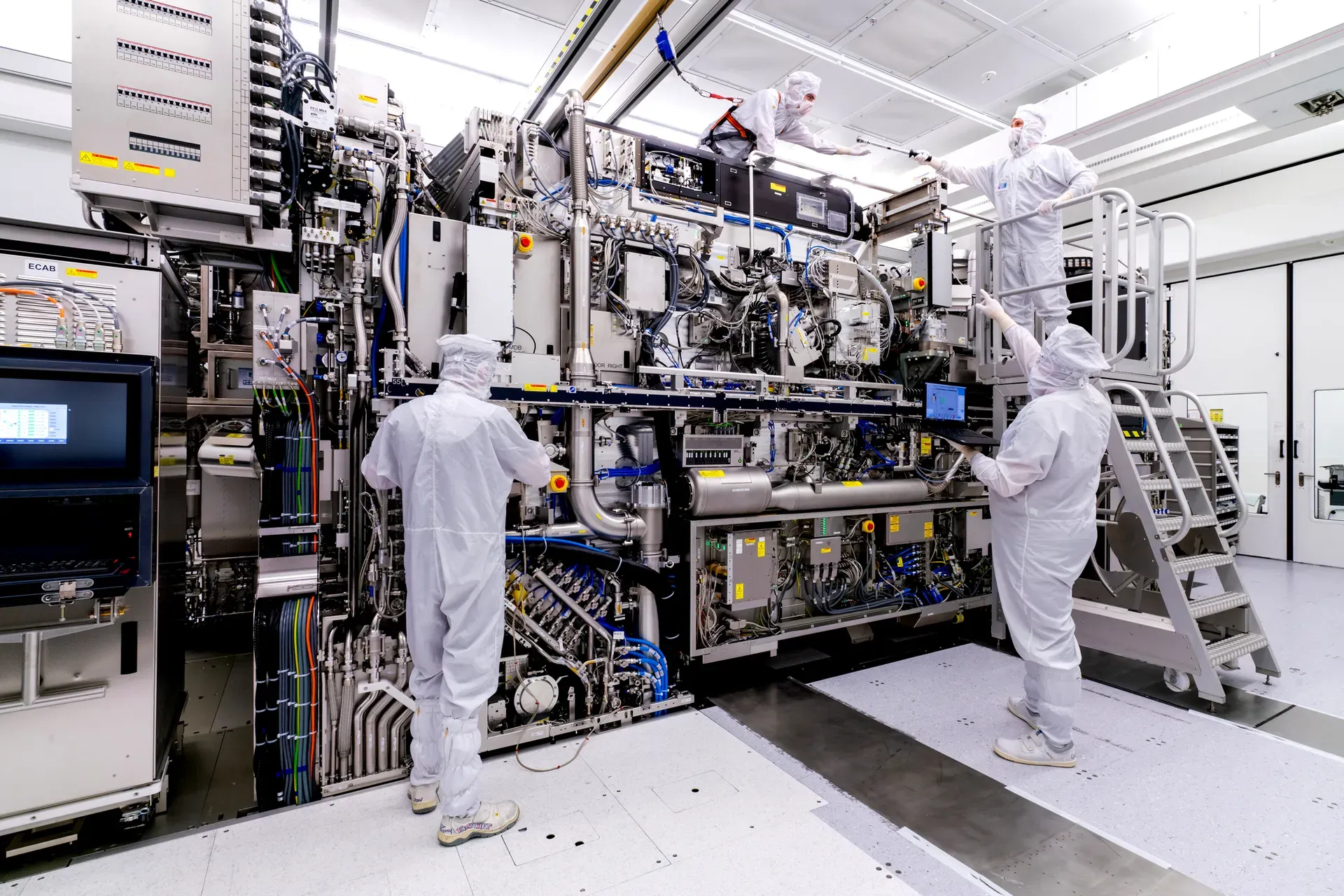
The EUV lithography machines described in this episode are built by a single company called ASML, headquartered in Veldhoven, in the Netherlands. There is no second supplier. No country outside the Netherlands manufactures a competing machine.
This is not a minor detail. The entire global semiconductor industry depends on ASML's EUV machines, and these are widely recognized as the most advanced manufacturing tools ever built. They cost upward of $200 million each and require precision down to the atomic level. The geopolitical implications are enormous and actively contested. Since 2019, the Dutch government has not granted ASML a license to export any EUV machines to China, an influence of Washington, as advanced lithography is seen as a force multiplier for military and surveillance capabilities.
There is a ton more to say about this, but I wanted to put it somewhere because the episode would give you an incomplete picture if I didn't.
Also, the machines are roughly the size of a school bus. About 33 feet long, 17 feet wide, and 13 feet tall, and each one weighs around 150,000 kilograms. I forgot that part.
Spruce Pine
The quartz from Spruce Pine, North Carolina is not just rare. It is effectively irreplaceable in the short term. Two mining companies operate there, Sibelco and The Quartz Corp, and the global semiconductor industry is dependent on Spruce Pine as the primary source for virtually all the high-purity quartz it consumes.
In September 2024, Hurricane Helene caused catastrophic flooding across western North Carolina, and Spruce Pine was hit hard. The storm dumped two feet of rain in the region, washing out roads, cutting power lines, and destroying homes and businesses. Both mines shut down on September 26. Sibelco restarted production about ten days after the storm, having sustained only minor damage, and resumed customer deliveries while ramping back to full capacity. The Quartz Corp took longer. The situation made visible the fact that the most advanced manufacturing process on Earth has a single geographic chokepoint, and it sits in a small town that can be cut off by a storm.
My Process
A few people have told me they're curious about my production process. So I thought I'd shed a little light on what this actually looks like, but first, some additional context is helpful here.
I used to be the Head Librarian at the Harvard-Smithsonian Center for Astrophysics. When I got that position I was coming in with a very digital perspective. I had been a Data and Metadata Librarian at Cornell before that and was very focused on software preservation and data curation. But when I took on my role at the CfA, I became responsible for a large, physical, archival collection.
I could write books about that collection, but the reason why it's relevant here is that I essentially spent the better part of a decade regularly working with historians and researchers who were digging into the history of astronomy using my library's collection. Particularly the history associated with the women who worked as Astronomical Computers at the Harvard College Observatory. This isn't a post about them (I promise there will be an episode some day), but that experience, and the women's stories, gave me a deeper interest in the history of computing and technology.
Then there was my code. I finished an MS in Data Science after taking on the CfA position. Finishing required me to complete a capstone project where I wrote an artificial neural network pretty much from scratch using Torch before PyTorch really existed. The code was something I really struggled with. But when I was instructed to deposit my capstone work into the institutional repository for archiving, they only wanted my paper. They didn't want the code. The labor that went into the code was not recognized as intellectually valuable, or they just couldn't archive it. Either way it felt wrong. So I started paying very close attention to what was missing when I read about contemporary astronomy and the rest of the computing landscape as I experienced it. There was so much missing.
All this to say that I've been collecting stories for a long time. When I was considering starting this show I decided to brainstorm a bit to see if I really had enough stories to share. And as soon as I started really trying to empty my head it became obvious there was more than enough to get started. Some of the stories felt like they fell into the "easy-to-explain" category, while others absolutely did not. So I decided to start with the ones I was confident I could write and to share a small batch all at once so I would at least have a small portfolio if I couldn't turn this into anything. But people listened, a lot more than I thought they would.
Now the stories are getting harder to tell, but I'm doing everything I can to keep this consistent while working full time. Now we're on episode 11 though, and I think I'm getting better at it.
I've been experimenting with episode length, and about 15 minutes feels right. It's enough time to tell a story, and hopefully enough time for someone who didn't know they were interested in this kind of history to learn that they are.
I record and write and research whenever I can fit it in. For this episode, I recorded my voice on a lapel mic, huddled under a blanket in a London hotel room while attending a conference. My voice was a little scratchy because I was two days in and it was starting to go. I finished the music and sounds late the night before I left. I forgot my good headphones, so I did the best I could with what I had (I have no audio production training). I typed the show notes and this post on the plane home.
Each story starts as a few bullet points or a link in Obsidian, something I think of as a story stub record. I add new ones whenever something jumps out at me. I spend a lot of time thinking about what the central conceit needs to be before I start in on the history, because that's where the story's spine comes from. I want the writing to feel visceral and different from how we usually experience technology. And I want you to feel connected to it, which is why I use the second person so often.
I'm not using AI to write the stories. I use it sometimes for editing, and for SEO on the website and show notes. I also organize my sources in NotebookLM so I can easily search across them while I'm writing. My husband helps me edit too.
My first degree is in English, and writing like this feels like pulling out an old, squeaky machine I need to remember how to use. So I really do appreciate every single download while I figure out how I want this to sound.
Don't forget to subscribe, rate, and review wherever you listen 💚
Support the show at Buy Me a Coffee.
The Episode
Script
Pick up your phone, tap the glass. It responds flawlessly.
We communicate through them and they tell us where to drive. We use them as flashlights.
They function so seamlessly that we stop wondering. We accept them as polished little black boxes. Generally, unless you like to take electronics apart, you don't ever see into your devices. But you've heard of Silicon Valley. You know there's silicon in there, somewhere. And silicon is in sand. Quartz sand.
But you can't shovel sand off the beach and turn it into the hardware that runs your phone. The physical reality of the digital world requires us to turn sand into something flawless. It requires light that is barely possible. And it all started with a mistake.
I'm Daina Bouquin. This is Found in the Machine.
The year is 1916. The world outside is tearing itself apart in the trenches of the First World War. But inside a metallurgy laboratory in Berlin, it is quiet. Jan Czochralski is working late. A Polish man. He is a self-taught chemist. He has spent the entire day and most of the evening staring at metals, heating them, cooling them, trying to understand the exact speed at which they crystallize. The kind of repetitive observation that blurs the lines of your vision.
On his desk there is an inkwell. Beside it, there is a small crucible left over from a previous experiment. It contains a cooling pool of molten tin. Jan reaches for his fountain pen. Without looking away from his papers in front of him, he dips the nib of the pen, but his hand misjudges the distance. He dips the pen into the crucible. It goes straight into the liquid tin. Realizing his mistake, he quickly pulls the pen upward. Then he stops because something catches the flickering light.
A silvery, hair-thin, shimmering wire is hanging from the tip of his pen. He doesn't just wipe it away. He looks. He wonders. Then he does it again. The pen goes back into the tin and slowly, deliberately this time, he pulls it up again. The thread grows. The tiny slit in his pen's nib is acting like a capillary. The liquid metal is being pulled up and is cooling the moment it touches the air, clinging to itself as it rises.
And this isn't just a wire. As Jan pulled the pen, the atoms in the pool of tin didn't scramble into a chaotic jumble as they cooled. They aligned. This wire is a single, unbroken, continuous crystal lattice. It is perfect. Jan Czochrolski has just invented a way to grow flawless crystals.
He wrote a paper about it. He called it a new method for measuring the crystallization rate of metals. But he had no idea what he had actually done. He would never know.
There are two streams of materials that must collide to make a microchip possible. First, there is the silicon that will become the chip itself. It begins its life as metallurgical grade silicon, forged by taking high-purity quartz, which is a rock mostly mined in deposits from China, Norway, and Brazil, and throwing it into an electric arc furnace with carbon. It is blasted at up to 2,000 degrees Celsius. Then it is chemically purified over and over again until it reaches what engineers call the 9N level. That's 99.9999999% pure. Out of one billion atoms, only one can be an impurity.
But having the purest liquid silicon on earth is only the first step. You also need to hold that perfect liquid without contaminating it. You need a very, very special crucible. The crucible you need does not come from a global supply chain. Overwhelmingly, it comes from a single town in the Blue Ridge Mountains, Spruce Pine, North Carolina.
Through a geological anomaly, Spruce Pine holds the purest natural quartz ever discovered on Earth.
So you have the ultra-pure silicon gathered from across the globe. You have the perfect quartz crucible pulled from the mountains of North Carolina. The silicon is molten inside that pristine vessel. Now, how do you get it out? How do you turn it into a pristine canvas for microchips? You use the method that Jan Czochrolski accidentally invented when he was too tired to notice where he put his pen.
You see, in the late 1940s and early 1950s, as researchers tried to make reliable transistors, they kept running into the same wall. They needed perfectly ordered semiconductor material. A single flaw, a single microscopic misalignment in the crystal lattice, and the electrical signals would scatter and fail. They needed a perfect canvas. And they did not know how to make one. Until they found an obscure paper from 1916. Today, nearly all silicon wafers on Earth are made using Czochrolski's method, often referred to as the CZ method.
Inside those ultra-pure Spruce Pine quartz crucibles, we dip a tiny seed of crystal into the molten 9N silicon, and slowly we pull it upward, spinning as it cools. We grow giant, flawless crystal cylinders, hundreds of pounds heavy, atoms aligned in perfect lockstep.
But Jan did not spend the rest of his life being celebrated for it. He left Germany in 1928, returning to a newly independent Poland. He became a professor at the Warsaw University of Technology. He was a brilliant, wealthy patron of the arts.
Then came 1939. The invasion.
The universities were violently shut down. Academics were arrested, sent to camps, executed. Jan, leaning on his pre-war connections in Germany, and his German wife, got permission from the occupying forces to keep his laboratory open. He rebranded it as a materials research facility. To the people on the street, to his former colleagues, he looked like a collaborator. A man who had traded his country's dignity for his own survival.
But they did not know that the lab was a front. Jan was secretly employing members of the Polish resistance, providing them with documents to keep them out of the camps. He was using the lab's machinery to reverse engineer German V-1 and V2 rockets. He was manufacturing grenade shells for the underground home army. His work had the approval of the Polish underground state. There's evidence that he sheltered two Jewish women in his own home.
But he looked like a collaborator. And when the war ended, the new communist regime arrested him and tried him for treason. He was acquitted. An investigation proved that he did not collaborate with the Nazis. He had never been a traitor. But it did not matter. The reputational damage was done.
He was stripped of his professorship. His name was meticulously and deliberately erased from the university's records. A man who would later be listed among the fathers of modern electronics died in 1953, running a small operation in his hometown, making cosmetics and sneezing powder.
Here is what he never saw.
By the time Jan died, the canvas was solved. His crystals would become every microchip we would ever build. The brains in every supercomputer, satellite, and smart toaster. But you still have to draw the pathways for the electricity to flow.
In the early days, we drew those pathways using visible light, shining it through a stencil-like mask onto the silicon to etch the circuits. But as we demanded smaller and faster machines, the stencils had to shrink. Today there are billions of transistors on a single chip. Those transistors are only a few nanometers wide. Five nanometers is about the length your fingernail grows in five seconds. You cannot etch something that small with ordinary light. The wavelength of visible light is too wide. It is like trying to paint a microscopic masterpiece with a heavy push broom.
To work at that scale, you need light that is roughly 100 times smaller than visible light. You need extreme ultraviolet light.
The machines that make and harness EUV light are among the most complex devices humanity has ever built. One machine costs hundreds of millions of dollars and contains more than 100,000 parts. Inside, EUV light bounces through a series of mirrors before passing through the stencil. More mirrors focus it onto the silicon. Those mirrors are polished so perfectly that if you expanded one to be the size of Germany, the tallest bump on its surface would be less than a millimeter high. Those mirrors a blueprint for billions of transistors onto the silicon that Jan's method grew with unthinkable precision. It is akin to standing on Earth and shooting an arrow through an apple on the surface of the moon. Then doing it again . And again. Thousands of chips can be etched onto a single silicon wafer.
And the light itself does not want to exist. Extreme ultraviolet light is swallowed by air. It does not occur naturally on Earth. So, deep within the EU V machine, there is a vacuum chamber. In that airless space, a generator ejects a microscopic droplet of liquid metal into the dark. Then another. 50,000 droplets , every single second. As each droplet falls, a high-powered laser fires a weak pulse, just enough to flatten the tiny sphere into a tiny pancake. A microsecond later, a second pulse fires with devastating force. The metal vaporizes. It becomes a plasma burning 40 times hotter than the surface of the sun. And in that violent, microscopic death, it flashes, throwing off a burst of extreme ultraviolet light.
And the metal, the drop that dies in the dark to light the digital age. It is tin. Molten tin.
In 1916, a tired man dipped his pen into a crucible of tin and pulled out the foundation of the digital world. More than a century later, we blast falling drops of that same metal to make light so fragile it can barely exist. That light is used to draw microchips onto the perfect crystals that power our devices.
And we use those devices as flashlights.
I'm Daina Bouquin. And this is Found in the Machine.
Sources
ASML. (2026). EUV lithography systems. https://www.asml.com/en/products/euv-lithography-systems
Branch Education. (2025, August 30). The $200M machine that prints microchips: The EUV photolithography system [Video]. YouTube. https://www.youtube.com/watch?v=B2482h_TNwg
Copley, M. (2024, September 30). A tiny town just got slammed by Helene. It could massively disrupt the tech industry. NPR. https://www.npr.org/2024/09/30/nx-s1-5133462/hurricane-helene-quartz-microchips-solar-panels-spruce-pine
Czochralski Research and Development Institute. (2026). Biography. Jan Czochralski. https://janczochralski.com/en/biography/
Hackaday. (2020, July 22). Jan Czochralski and the silicon revolution. https://hackaday.com/2020/07/22/jan-czochralski-and-the-silicon-revolution/
Institute of National Remembrance. (2026). Jan Czochralski. Giants of Science. https://gigancinauki.pl/ge/biographies/8248,Jan-Czochralski.html
IUCr. (2). Who was Jan Czochralski? Out of the shadows. IUCr Newsletter, 28(3). https://www.iucr.org/news/newsletter/volume-28/number-3/who-was-jan-czochralski
JanCZ.org. (2025. The other fork: JanCZ history rewritten. https://www.jancz.org/posts/jan-czochralski-3
Kępa, M. (2017, August). Nazi collaborator or resistance fighter? The extraordinary story behind the man at the core of the digital revolution. Culture.pl. https://culture.pl/en/article/nazi-collaborator-or-resistance-fighter-the-extraordinary-story-behind-the-man-at-the-core-of-the
Montoya, A. (2024, October 11). Quartz mine crucial for making chips reopens ten days after Hurricane Helene's devastation. Tom's Hardware. https://www.tomshardware.com/tech-industry/quartz-mine-crucial-for-making-chips-reopens-ten-days-after-hurricane-helenes-devastation
Pofeldt, E. (2026, February). Rediscovering the lost legacy of chemist Jan Czochralski. IEEE Spectrum. https://spectrum.ieee.org/legacy-chemist-jan-czochralski
PV Education. (2024). Refining silicon. https://www.pveducation.org/pvcdrom/manufacturing-si-cells/refining-silicon
Sokolowski, G. (2023, July 17). Polish chemist creates the foundation for the semiconductor industry. PASI EDU. https://pasi-edu.org/polish-chemist-creates-the-foundation-for-the-semiconductor-industry/